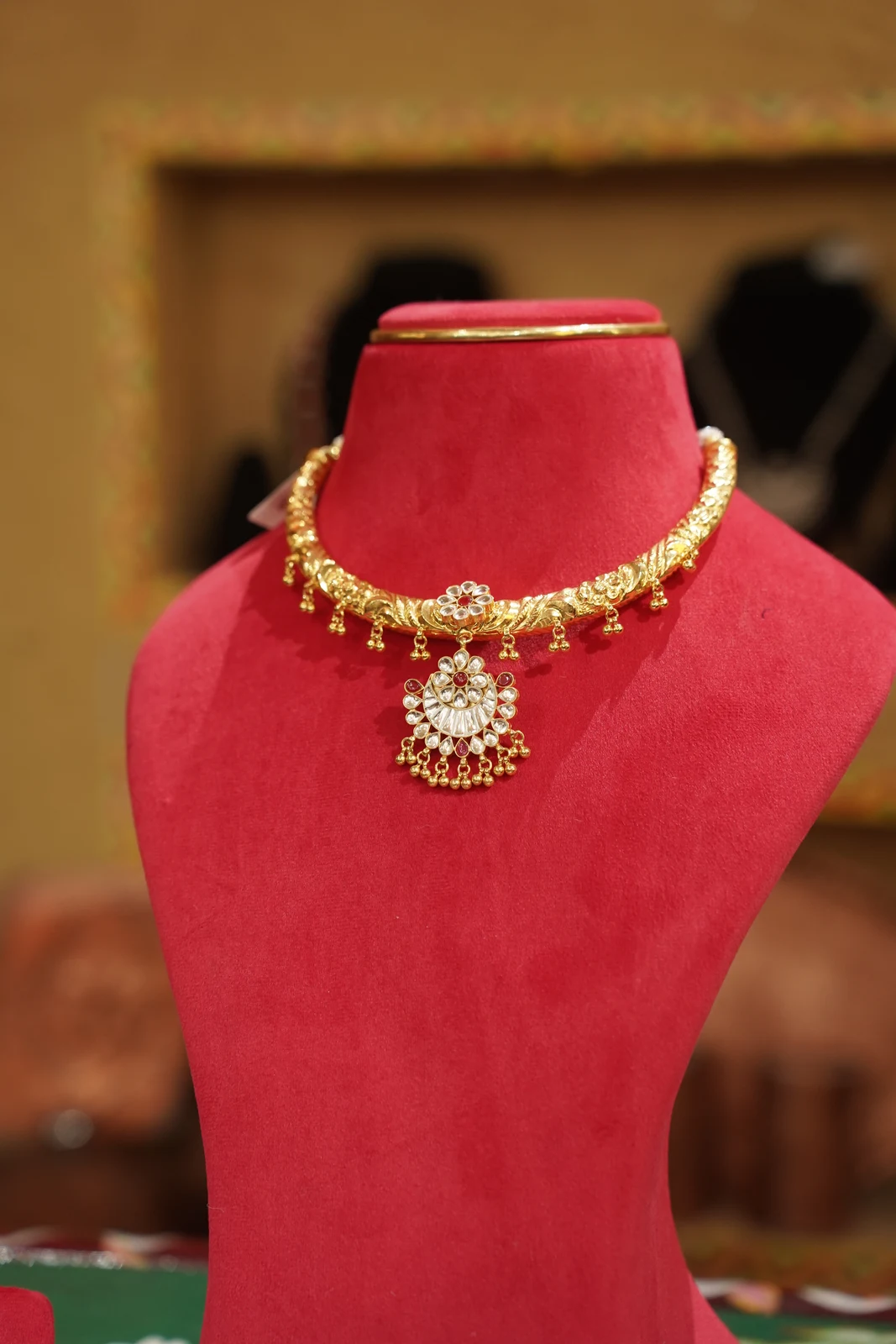
Contemporary jewellery can interpret Uttarakhand's landscapes through proportion, colour, pattern and movement. Visual resemblance alone does not establish an ancient regional or sacred meaning; specific claims need documented cultural evidence or the maker's attributed explanation.
A mountain landscape does not need to appear as a tiny mountain on a necklace to influence a design. Inspiration can begin with a curve, a repeating line, a contrast between light and shade, or the way a small detail becomes visible against a large background. A person looking at jewellery may recognise something of a place even when the maker had another starting point.
That recognition can be meaningful, but it needs careful language. Contemporary jewellery can interpret Uttarakhand's landscapes through proportion, colour, pattern and movement. A resemblance is not proof that a motif has an ancient regional meaning. When a designer's explanation or a documented cultural account is available, it can support a more specific story. Without it, we can still look closely and describe what we see.
Devbhoomi is a familiar name associated with Uttarakhand. For a jewellery story, however, the word should invite attention to particular places and people rather than replace them. The mountains are not a single picture, and Pahadi identity cannot be reduced to a decorative border. The richest inspiration leaves room for that variety.
Begin with a place you can name
A useful landscape reference has a location and a point of view. It might be a photograph taken from a family home, a sketch made beside a path, or an image of a place visited with permission. Record where the reference came from and what caught your attention. “The repeated curves in this view” says more than “the eternal spirit of the Himalayas.”
If you did not take the photograph, identify its photographer and check permission before using it. A public photograph can be easy to find without being free to reproduce. Its caption may also carry information that gets lost when an image is copied: the season, location, date or direction of the view. Keep those details with the reference.
The UNESCO description of the Nanda Devi and Valley of Flowers National Parks offers one documented example of Uttarakhand's landscape variety. It describes the Valley of Flowers' alpine meadows and flora alongside Nanda Devi's more rugged terrain. This establishes the character of those protected places; it does not establish the origin of a jewellery pattern photographed beside them.
You need not travel to a famous destination to observe well. Look at what is already part of your relationship with a place. How does a railing frame a distant view? Which colours stand out on a familiar walk? Which shapes recur in your photographs? Such observations can become design prompts without being presented as a history of traditional ornaments.
Curves, intervals and the pleasure of repetition
Try looking at the outline of a necklace before its decoration. A broad curve can carry the design on its own. A narrow band may give more attention to the details attached to it. In a photograph, trace the shape with your eyes and notice where the line becomes thicker, changes direction or opens into empty space.
Then look at the intervals. Repeated elements might sit close together or allow gaps between them. The spacing can make a design feel dense, quiet or lively. These descriptions concern what the arrangement does visually. They do not require a claim that every repeated element represents a mountain peak, a terrace or a particular local story.
A designer could choose to interpret the rhythm of a landscape through such spacing. For example, a new sketch might explore a sequence of broad and narrow sections after studying a view. That would be a contemporary design exercise, not evidence about an existing necklace. Keep the sketch and its reference together so that the idea can be explained in the designer's own terms.
Scale matters too. A detail that looks prominent in a close-up may barely register when the ornament is worn. Before describing a piece as dramatic or delicate, compare the detail view with a full view and the actual dimensions. The relationship between the small element and the whole composition is often where the design becomes most interesting.
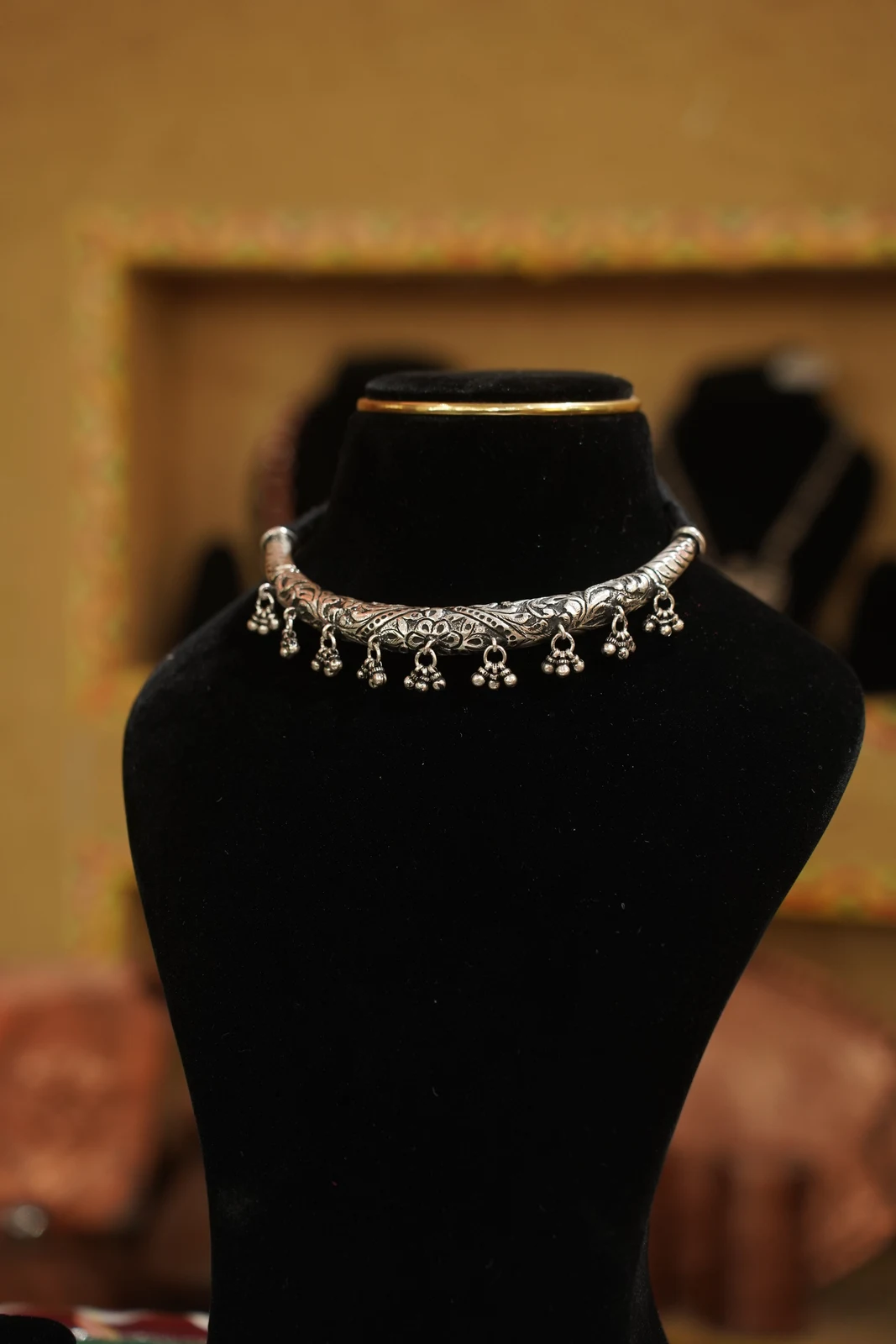
A flower-like motif does not identify a flower
Jewellery can include rounded forms, radiating elements or petal-like outlines. When there is no confirmed name, these are honest descriptions. A stylised design may combine shapes, simplify them or depart from a botanical reference altogether. It should not be assigned a plant species merely because one flower would make a pleasing caption.
If a designer says a motif was inspired by a specific flower, ask which reference they used and what they chose to keep. Was it the outline, the arrangement, the colour or a personal memory? Their answer gives the design a clear contemporary context. It still does not prove that the same motif carried that meaning in earlier jewellery.
For a photograph of a real plant, check the identification separately with a reliable botanical source or qualified local knowledge. Keep an uncertain identification uncertain. Describing a small flower in a mountain photograph does not diminish the image; guessing its name can weaken everything said around it. The viewer should be able to tell observation from confirmed identification.
A practical sketch exercise is to choose one feature rather than copy an entire plant. Study the relationship between its centre and surrounding forms, then draw several versions with different spacing. Compare how each version reads at necklace scale. The exercise creates a new interpretation whose decisions can be explained, rather than borrowing a cultural meaning that nobody has verified.
Colour is an experience before it becomes a claim
Look at a landscape photograph and choose three colours that actually appear in it. Include a quieter colour, not only the most striking one. Then compare those colours with an outfit and an ornament. This is a styling exercise: a way to build a visual conversation between a remembered place and something you choose to wear.
The colour of jewellery deserves its own precision. Gold-coloured and silver-coloured describe appearance, while gold, silver and a specified coating describe materials. A photograph's warm light can alter the impression of a surface. Ask for the actual material description of a contemporary piece rather than using a landscape mood as a substitute for product information.
You can also explore contrast without matching colours literally. A plain garment can provide space around an ornament with a detailed border. A textured fabric can change how a smooth outline is perceived. Try the combination in ordinary light and take a full-length photograph if that helps you judge proportion. The reference image is a starting point, not a rule you must obey.
Some days a familiar colour combination may matter to you because of a particular journey or home. You do not need to turn that association into a claim about what everyone in Uttarakhand wears. Personal explanations are strongest when they stay personal. “This reminds me of a place I know” leaves room for another person's different response.
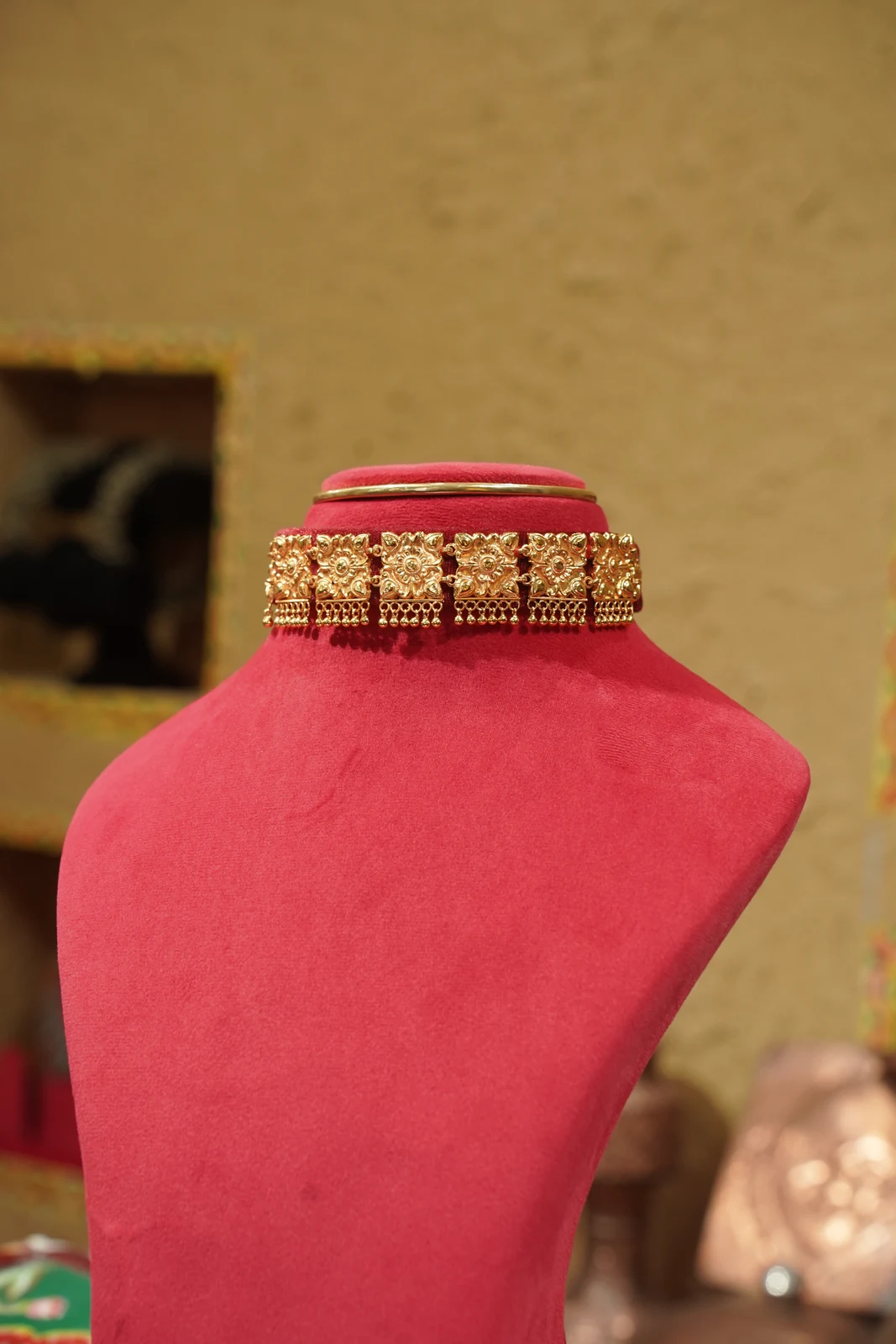
Folklore needs a storyteller and a context
A pattern can prompt a story, but the story should not be invented to make the object sound older or more sacred. If a relative connects an ornament with a local tale, ask where they heard it and how they remember it. Record their account as an account, with permission, rather than presenting it as a meaning shared by every Pahadi family.
Names and spellings may vary between speakers. Preserve the form used by the storyteller and add an explanation if readers need one. If a translation changes the tone or removes a detail, discuss it with the speaker. An article is easier to trust when it identifies who supplied a story and what kind of evidence that story provides.
Religious references require particular care. A triangle, circle or flower-like shape may have more than one possible reading. Do not announce a deity connection on the basis of resemblance. Ask for a source or the maker's intention. Where the explanation is a contemporary personal interpretation, describe it that way instead of claiming a universal sacred code.
It is also reasonable for a story not to belong in a product description. A person may be happy to discuss a family object privately but not want their words used in marketing. Agree on that boundary before writing. Respect for a tradition includes respect for the people who choose when, where and with whom its stories are shared.
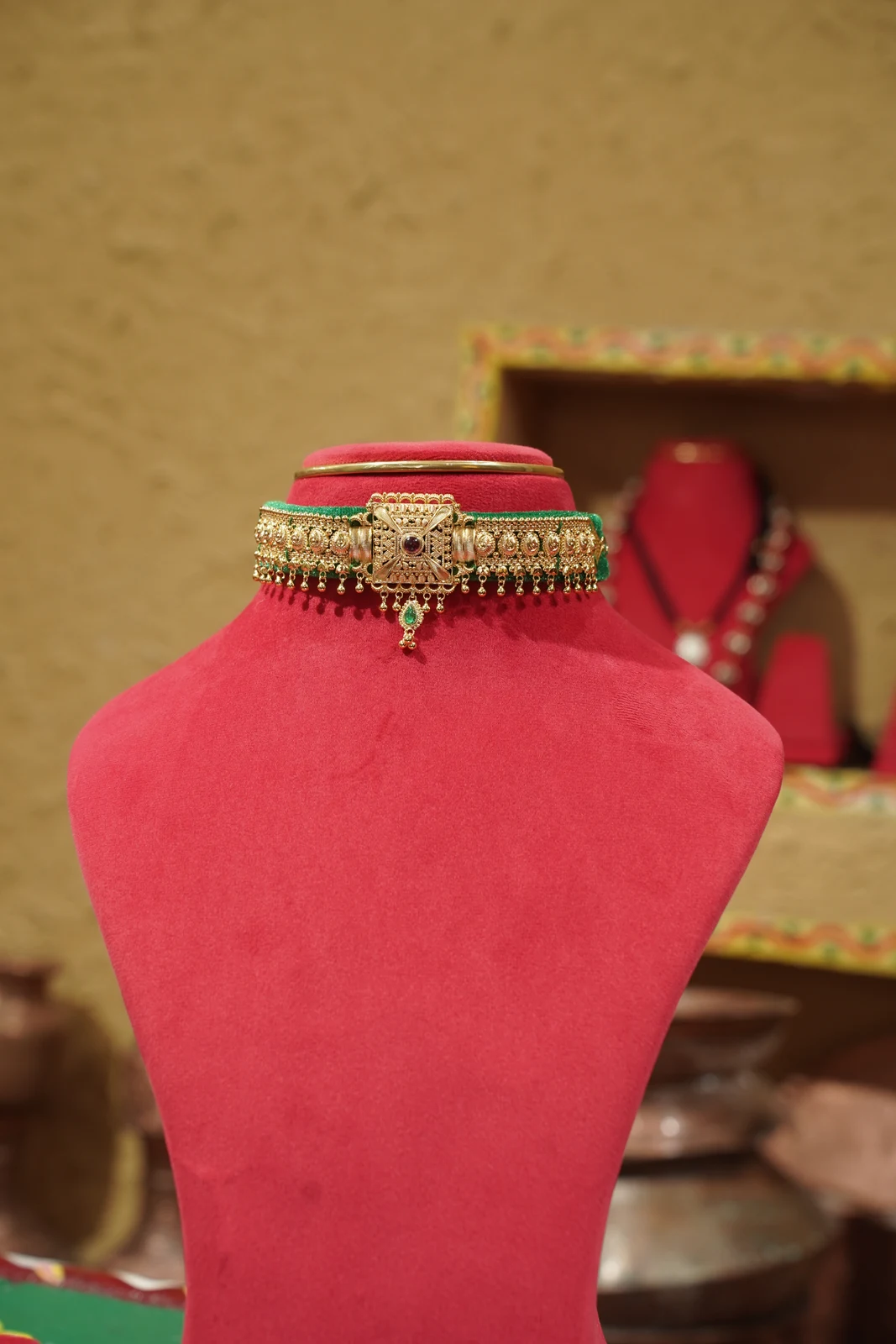
Read a jewellery photograph without giving it a false history
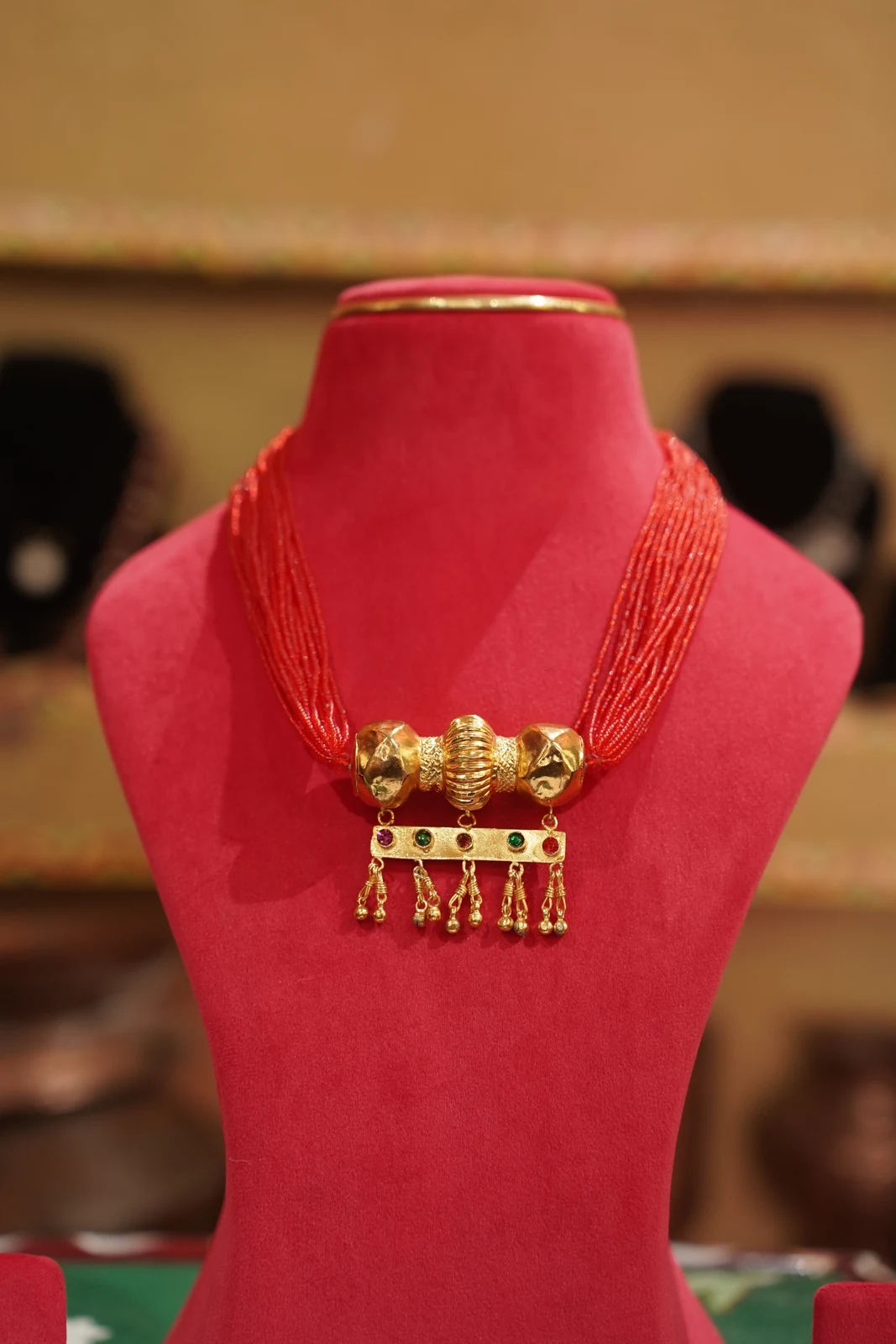
Start with the visible facts. Is the piece a collar, a chain-based necklace or a pendant? Where does decoration sit? Is the outline continuous, layered or broken into separate elements? Does the image show a fastening? A careful description helps the reader understand the pictured design even when its manufacturing or historical background has not yet been established.
Next consider the photographer's choices. A close-up can emphasise surface detail; a wide view can make the shape clearer. Dark backgrounds and angled light may create a different impression from a photograph on warm cream. Those differences are useful for visual storytelling, but they do not change the material specification or give the ornament a new provenance.
The contemporary jewellery photographs in this story invite you to look at visible curves, borders and patterns. A repeated edge can suggest rhythm; a curved outline can draw your eye around a neckline. These are observations about the designs shown, rather than evidence of a particular historic motif or a named maker’s intention. If a design reminds you of a place, keep that personal association alongside its actual product description.
If a maker's design account becomes available later, attach it to the relevant photograph. Specify which feature they were discussing. The account might change your initial reading, and that is useful: it allows the article to grow from an observer's response into a more informed conversation. Keep both voices clear rather than silently converting the first impression into the maker's intention.
A small practice for responsible inspiration
Build a reference sheet with three parts: what you observed, what you know, and what you want to ask. In the first part, describe shapes, spacing and colours. In the second, list the confirmed location, photographer and any verified object information. In the third, record questions about the motif, making process or story. This structure gives uncertainty a useful place.
Keep the original reference alongside later sketches. If a design changes during development, note why. Perhaps the initial outline was uncomfortable, or a smaller element worked better with the chosen proportions. Such decisions tell a real design story. They are more valuable than attaching a sweeping legend to a finished object after the work is complete.
If another person's artwork, ornament or photograph is central to the reference, ask what permission and credit are appropriate. Do not assume that calling it inspiration removes that responsibility. For a community-specific practice, speak with relevant knowledge holders rather than relying on a general label. A respectful approach may involve changing the idea or choosing a different reference.
Finally, review the caption independently from the image. Can a reader tell what is documented and what is your interpretation? Are the names accurate? Does the wording imply an endorsement, ancient origin or religious meaning that the evidence does not support? This review need not make the writing dry. It gives the more evocative parts a solid foundation.
Bringing a mountain memory into everyday dressing
Choose one feature to carry into an outfit. It might be a curve you enjoy, a restrained colour combination or a balance between a broad outline and small details. Start with clothing you already own. A simple neckline can let a collar shape read clearly, while another garment may work better with a longer necklace. The wearer, rather than the reference board, makes the final decision.
Consider practical movement as well as the mirror. Try sitting down and turning your head gently. Check whether the ornament works with the fabric and whether the fastening is manageable. If you borrow a piece, learn its handling instructions from its owner. A connection to heritage can be expressed through careful use as well as through an outfit photograph.
There is no requirement to wear a complete traditional ensemble whenever you choose a Pahadi-inspired design. Nor does a modern combination need to be defended as the only way to keep culture alive. Different people may want different relationships with dress. Explain your own choice with specificity, and give others room to make theirs without ranking them.
Explore the Hansuli collection for contemporary designs, keeping each product's verified description alongside its photographs. For a question about a pictured ornament's materials, dimensions or design background, use the contact page. Ask about the feature that interests you rather than assuming a meaning from the collection's atmosphere.
Can a new design honour a place without copying an old ornament?
Yes. A new design can respond thoughtfully to a landscape, a personal memory or an observed pattern, provided its explanation is honest about that relationship. It does not need a fabricated ancient origin to be worth wearing. When a documented traditional form is involved, identifying that form and its source helps readers understand where interpretation begins.
Can the same piece remind two people of different places? Certainly; a viewer's response and a maker's intention are separate things. Share the response as your own. If you later learn the maker's account, let it add to the conversation rather than erase the first association. Jewellery can hold more than one reading without every reading becoming a historical fact.
The most useful connection between mountains and jewellery begins with attention. Name the place when you know it. Credit the person whose image helped you see it. Describe the ornament accurately. Ask about the story before repeating it. From those small habits, a visual article can become something richer: a record of how people notice, interpret and care about the places they carry with them.