A hansuli is a rigid collar necklace. Its silhouette, fit and construction help distinguish the form; the stories of particular wearers and objects explain its personal place in Uttarakhand heritage.
A hansuli is a rigid collar necklace that sits near the collarbone. Its importance in Uttarakhand lives in the relationship between a recognisable form and the people who choose, wear and remember it. For a family in Garhwal or Kumaon, that connection may begin with a wedding photograph, a familiar way of dressing or the name an elder uses when opening a jewellery box.
The shape is worth a closer look. A collar draws a line around the base of the neck, becoming part of the outline of the wearer rather than simply hanging from it. Decoration can make that line elaborate, but the curve remains the starting point. Even a richly patterned example has a structure you can follow with your eye.
Preserving that form means understanding how it works as well as appreciating what it represents. How does the necklace sit? What changes when it is seen from the side? Which clothes give it room? Those questions bring a heritage ornament into the present, where a new wearer can enjoy its character and make a considered choice about a particular piece.
A familiar name, a wider history
The Indian Family Jewels exhibit describes hasli as a rigid collar, notes Hansuli among its related names, and connects the name with the collarbone. That documented introduction helps explain the form's identity.
A name can travel further than one region, and a necklace form can acquire different meanings along the way. Uttarakhand's relationship with the hansuli can be celebrated without assigning the entire ornament's origin to the state. Local significance becomes clearer when a story identifies the wearer, place and occasion being discussed.
For an inherited piece, an old photograph or a known owner gives that account a useful beginning. A recorded date may concern a purchase, a gift or a photograph rather than the original making. Keeping those distinctions visible lets a family enjoy its history without needing to supply an impressive age for every object.
The same care helps with a contemporary design. An older silhouette may provide inspiration while the proportions, fastening or decoration serve today's wearer. That relationship is interesting in itself. A new necklace can carry an affection for heritage while being described plainly as a new interpretation.
Why the collar shape matters
Think first about the line that a necklace makes. A rigid collar maintains a relatively definite outline; a flexible necklace changes more readily according to its links, attachments and the way it hangs. Both can be attractive. They create different relationships with a neckline, and knowing the difference makes choosing easier.
Look at the width of the curve, the height of its front and the space within it. A shallow front may leave more of the upper chest visible. A deeper decorative section may occupy more of that space. A pendant can extend the composition below the collar, while small hanging elements can introduce movement along an otherwise continuous line.
Then consider visual weight. A necklace can look substantial because of its broad surface, dense pattern or closely spaced decoration, even before its physical weight is known. Another can look lighter because the curve is narrow or the elements are separated. These are observations about appearance, useful for styling, rather than estimates of how heavy the piece will feel.
The opening and fastening belong to the design too. They affect how the wearer puts it on and how the back relates to hair, clothing and movement. A front photograph may hide them completely. A well-informed choice combines the striking view with the practical views, so the whole necklace is understood.
Read the front, then look at the profile
The front view tells you where attention is likely to settle. Follow the curve from one side to the other. Notice whether the surface pattern continues evenly, whether an element sits at the centre and whether hanging details are arranged symmetrically. A central feature may guide the eye downward; an uninterrupted curve can keep the emphasis closer to the neck.
The profile reveals another part of the composition. It shows how far the piece projects, how its front is shaped and how decoration sits in relation to the collar. A necklace that looks flat in a straight-on photograph may have depth that becomes important when paired with a high neckline or structured garment.
A view of the reverse helps explain the relationship between visible decoration and construction. Look for how elements are attached and where a fastening sits. Ask the seller to explain any fitting you cannot identify. Clear photographs are especially useful when ordering online, because they reduce the amount of practical information you have to infer from an attractive hero image.
For a fitting demonstration, ask to see the actual design being put on as intended. Each necklace deserves its own instructions. Treat a rigid collar as a shaped object rather than a flexible chain: the correct opening, adjustment or fastening method should come from information about that particular piece.
Before comparing options, ask for photographs taken in similar positions. A close crop can make one collar appear broader than another, while a tilted view can conceal the opening. Use dimensions to check scale, and compare the complete outline as well as the decoration. If a measurement refers to the full width, the interior opening or a pendant, keep those distinctions clear in your notes. This gives your shortlist a practical basis even when the photographs have different backgrounds or lighting.
Two contemporary designs, two different emphases
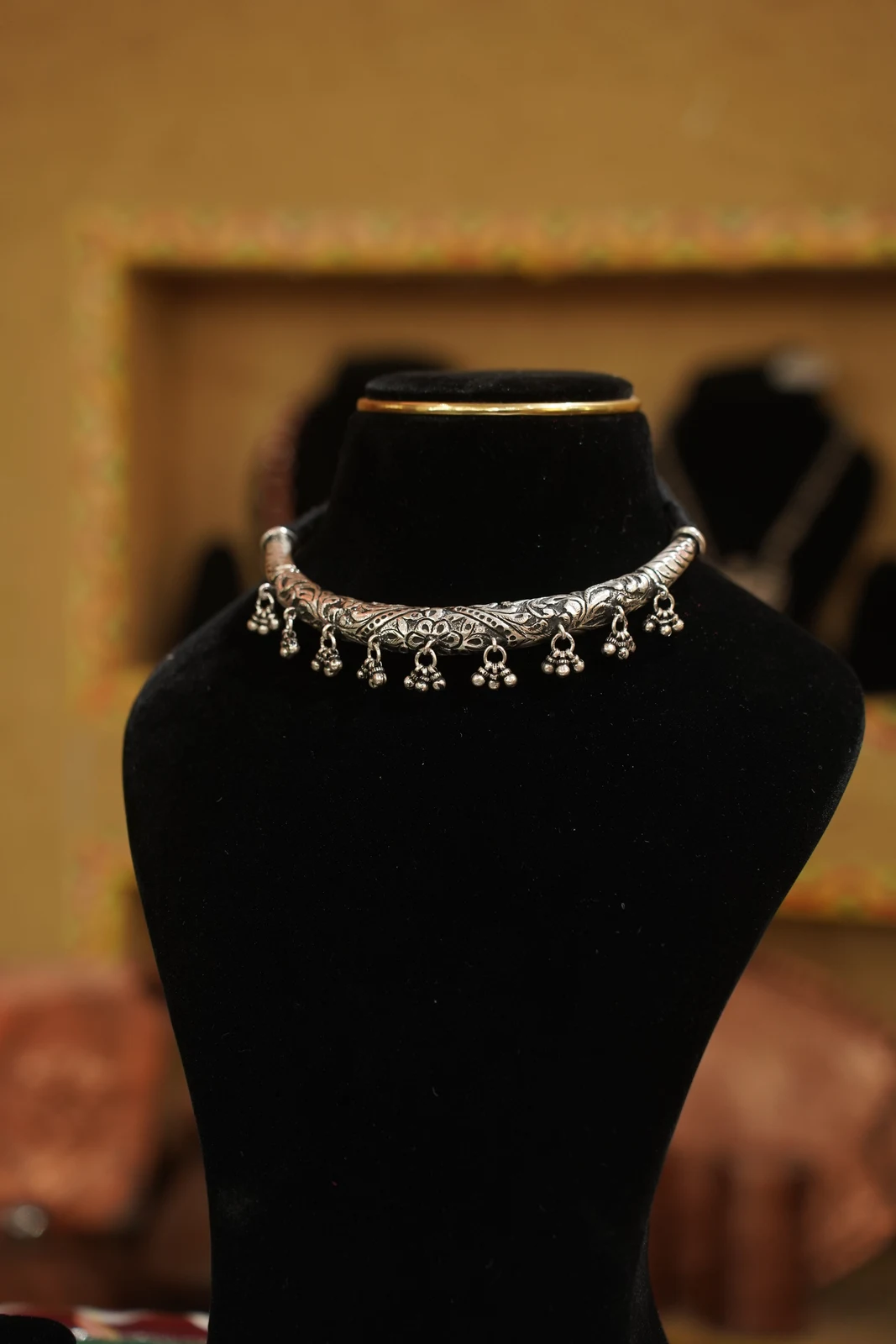
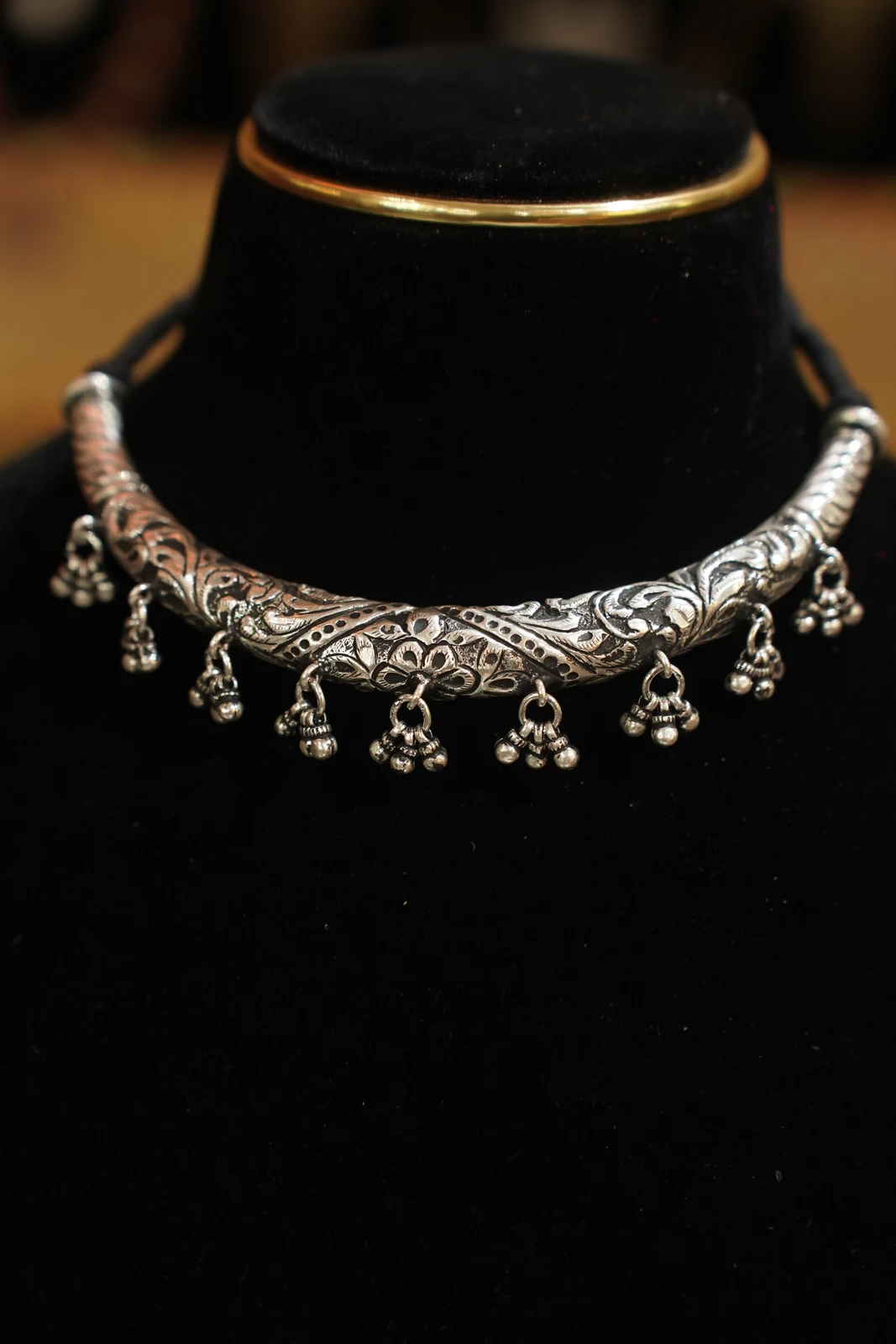
The contemporary catalogue photograph selected for this article shows a silver-coloured continuous collar with scroll-like patterning and small dangling clusters. Its main visual movement follows the curve and repeats across the decorative surface. With no central pendant dominating the front, the eye can travel along the necklace rather than stop at a single large focal point.
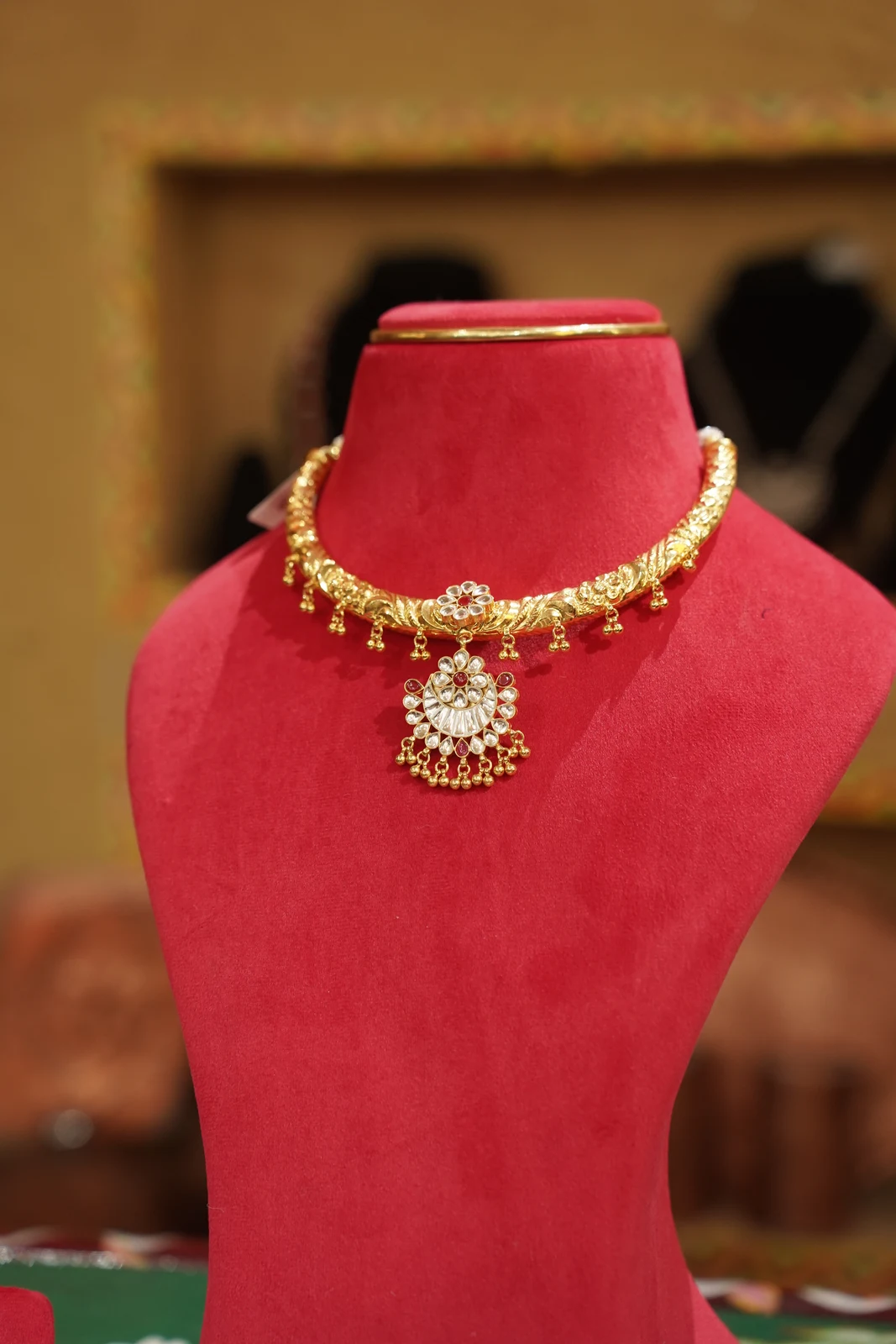
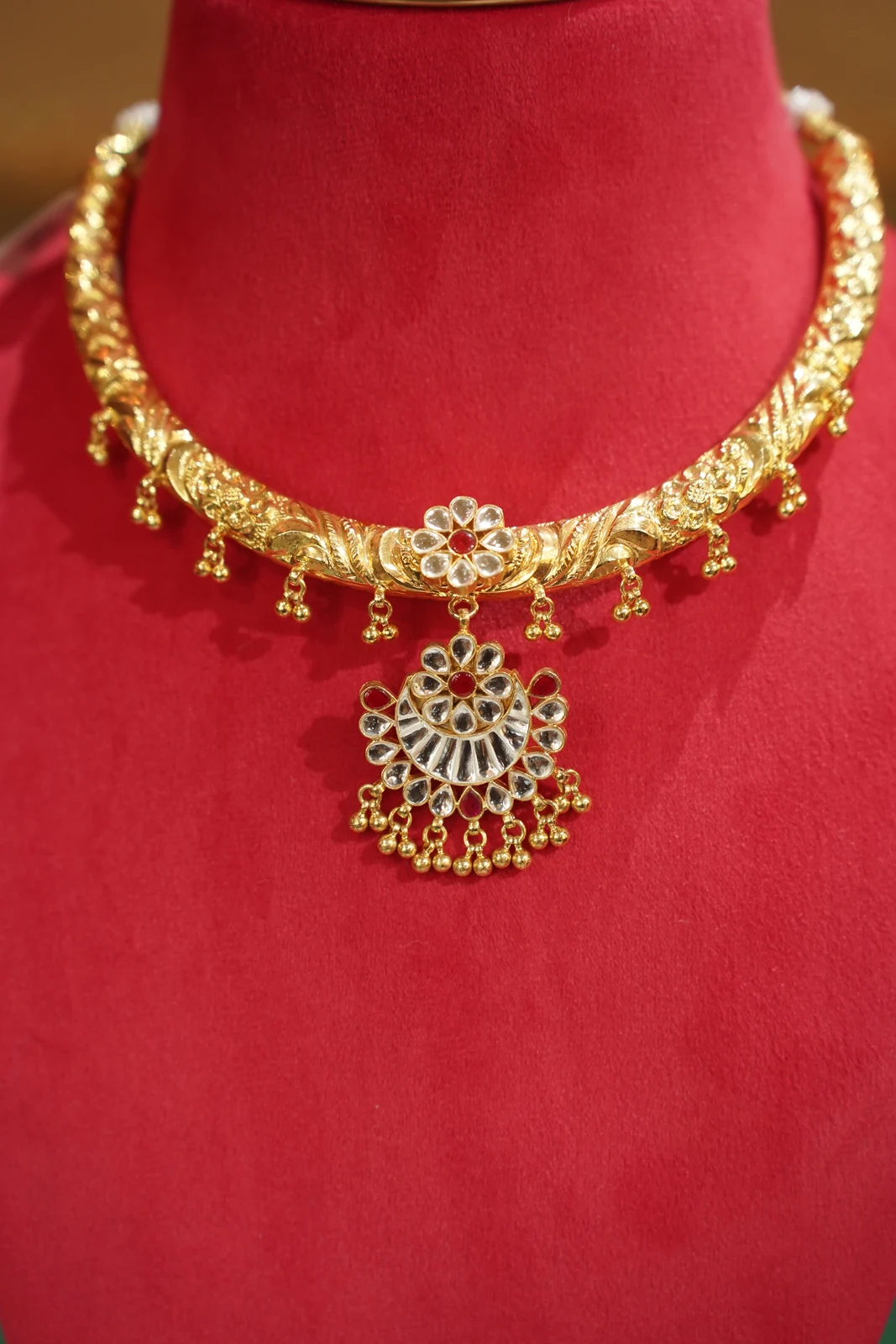
A second catalogue example is gold-coloured, with a floral central pendant and smaller hanging clusters. Here the central element changes the outline. The curve still frames the neckline, but the pendant extends the composition and gives it a more pronounced centre. The smaller clusters contribute detail around that focal point.
These observations describe what is visible in the photographs. Material specifications belong to the individual product information. Colour is useful when planning an outfit, while composition, finish, dimensions and weight are separate questions to confirm before choosing.
The comparison also shows how two designs can share a collar idea and create different effects. Someone wanting an even visual rhythm may prefer the continuous patterned line. Someone wanting a defined centre may enjoy the pendant-led design. Neither requires a claim of greater antiquity or cultural importance to explain its appeal.
What a comfortable fit feels like
Begin a try-on with the necklace positioned as its design intends, then give yourself time to notice it. Look at where the front rests and how the sides sit. A collar should be considered in relation to your own neck and shoulders, rather than judged solely by how it appears on another wearer.
Turn your head, move your shoulders and sit down. Try the movements you expect during the occasion: looking down, reaching gently forward or adjusting a sleeve. Notice pressure, catching and the position of hanging elements. A piece can look balanced while you stand still and feel quite different during ordinary movement.
Ask for relevant dimensions and weight before an online purchase. Where a fitting or adjustment question remains, explain it to the seller using the actual design name. A general assurance that a collar suits everyone offers less help than a clear explanation of its opening, dimensions and intended method of wearing.
Also consider the length of the occasion. A short photograph session and a full day of celebration place different demands on comfort. Make that part of your choice, especially when trying a form you have not worn before. Enjoyment is easier when the necklace can be forgotten for a moment instead of requiring constant attention.
An open shirt gives the curve space
An open shirt neckline can provide room for a collar's outline. Try the necklace with the shirt arranged as you would actually wear it, then check whether the fabric falls clear of the curve. The relationship changes with the height of the opening, the stiffness of the collar and the depth of the necklace's front.
A plain shirt can make surface decoration easier to see. A patterned shirt may work too, especially when its pattern leaves enough visual separation around the neck. Compare the combination in ordinary light, at the distance another person would usually see it, instead of relying only on a close-up mirror view.
For a pendant-led collar, observe where the pendant ends relative to the shirt opening. A necklace can feel more settled when its main element has a clear background. If the fabric repeatedly crosses that element, a small change in the shirt arrangement or a different design may make the composition easier to wear.
Earrings complete the decision rather than follow a compulsory rule. Try a smaller pair first if the collar carries considerable detail, then compare with something larger if you enjoy it. Choose the arrangement that gives the necklace and your face the attention you want, with comfortable movement on both sides.
A kurta creates a different frame
With a kurta, begin at the neckline rather than at the colour chart. A round opening, a slit and a higher neck create different spaces for a collar. Hold the necklace in place or try it safely with the garment, then observe whether its curve reads clearly or competes with the garment's edge.
Embroidery can become part of the composition. A heavily decorated neckline may already provide a strong frame, while a quieter surface gives the necklace more room. Neither arrangement is automatically wrong. The question is whether you can see the details you value and whether the combination remains comfortable when worn.
Dupattas add another layer to consider. Place the fabric as you intend to wear it and move through a few ordinary gestures. Check whether it catches small hanging elements or repeatedly covers the centre. A styling choice that looks effortless in a still image may need a different drape to remain easy through a long gathering.
Let the occasion guide how much detail you combine. One wearer may enjoy a richly layered festive look, while another may prefer the collar against a plain kurta. A heritage form can support both preferences. The wearer supplies the balance rather than following a single approved arrangement.
Dresses, high necks and everyday combinations
A dress with a clear neckline can give a collar a distinct outline. Consider the relationship between the necklace's curve and the garment's own lines: a central pendant may echo a vertical seam, while a continuous collar may draw attention across the shoulders. Try the combination as a whole before deciding which detail leads.
A high neckline changes that relationship because the necklace rests against fabric rather than appearing within an opening. Check the surface and structure of the garment. Thick folds can interrupt a collar's position, and a delicate fabric may need particular attention around edges or dangling decoration.
For an everyday outfit, begin with what you already wear and enjoy. A simple top, familiar earrings and one considered collar can be enough. You can explore the form without purchasing a whole new wardrobe or turning an ordinary outing into a formal heritage presentation.
Photograph a few combinations for yourself if that helps compare them. Include a front and side view and note which felt comfortable, not just which looked striking. The most useful styling record is the one that helps you choose quickly the next time, knowing how the necklace behaves with actual clothes.
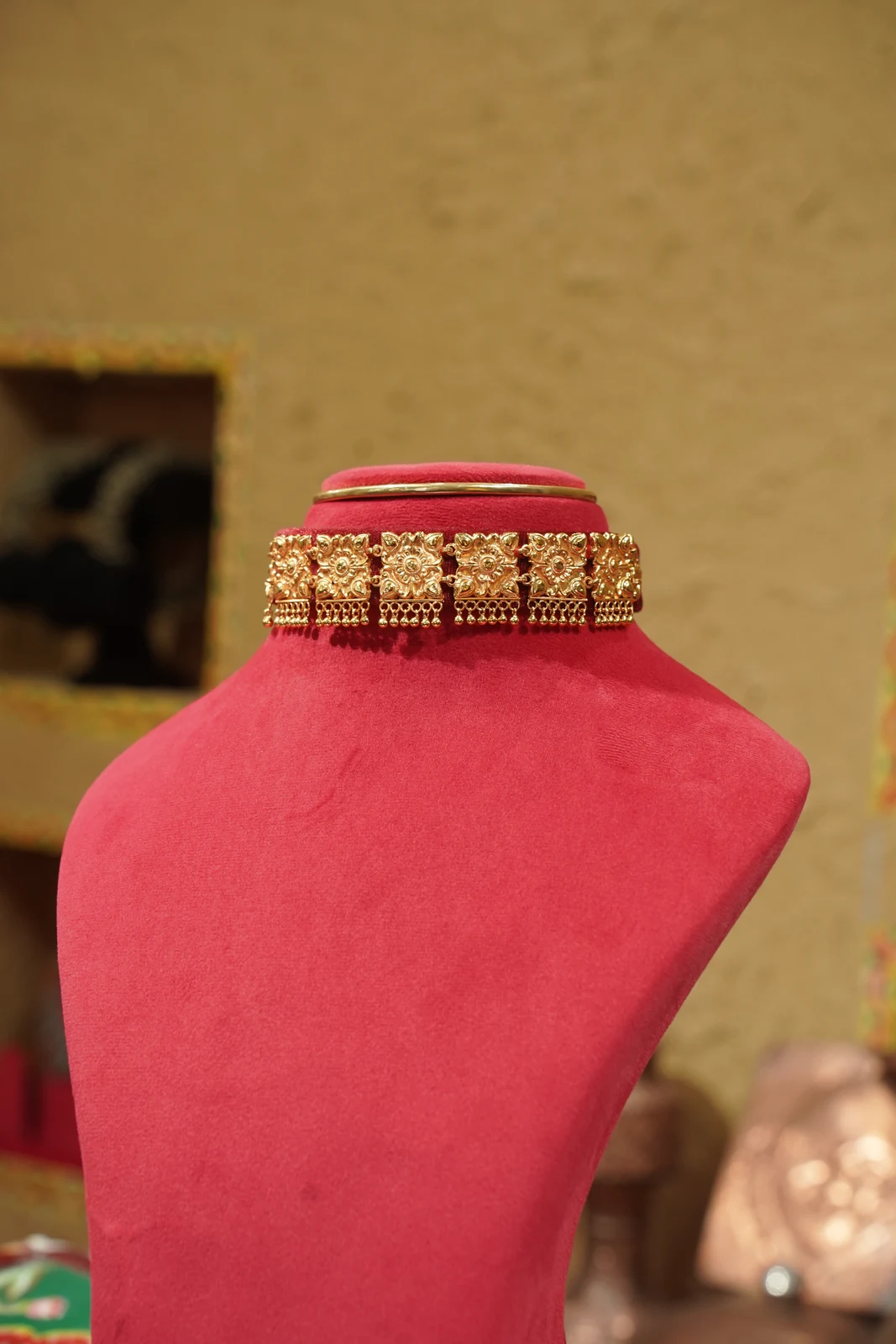
Choosing a contemporary interpretation
Ask what attracts you first: the rigid curve, the pattern, the central element or the memory it brings to mind. Naming that preference makes comparison easier. Two pieces may share a traditional reference but differ enough in proportion and decoration that only one gives you the effect you hoped for.
Then move from appearance to practical information. Confirm the material description for the particular item, its dimensions, fastening, care instructions and any relevant adjustment guidance. Check which photographs show the exact design. A clear answer to each question helps connect an appealing image with the object that will arrive.
Look for a design you can imagine using on more than one occasion if versatility matters to you. Try the collar with a quiet everyday neckline and with something more festive. The same object may take on a different character as its background changes, allowing a familiar piece to remain interesting over time.
An inherited necklace needs a separate condition decision before styling. If its fittings or construction raise concerns, seek an assessment. You can appreciate the old form, keep its photograph and choose a contemporary interpretation to wear while the family piece is cared for appropriately.
Keeping a recognisable form alive
Devbhoomi, a familiar name for Uttarakhand, can evoke a sense of place and belonging. With jewellery, that connection becomes more specific through names, people and objects. A hansuli's curve is a starting point for noticing those relationships, whether someone encounters it in a family photograph or chooses a new design for their own wardrobe.
Keep a concise record of an inherited example's known owner, local name and earliest identified photograph. For a new piece, retain its specification and care information. Those small acts give the next wearer something useful alongside the necklace itself, without requiring every object to carry a complete historical narrative.
The pride of the form can live in careful observation, comfortable wearing and an honest story. Follow its line, understand its fitting and choose the interpretation that feels right for you. When a familiar ornament remains both recognisable and usable, another person has a reason to look at it closely—and perhaps to make it part of a new memory.
Explore the current Hansuli jewellery collection
Ask Hansuli about a specific design, fit or material description