A karigar is a skilled maker. Understanding a jewellery piece means asking about its actual materials, shaping, joining, decoration, fit and aftercare. Different designs can use different processes; a photograph or a handmade label alone cannot verify the full making story.
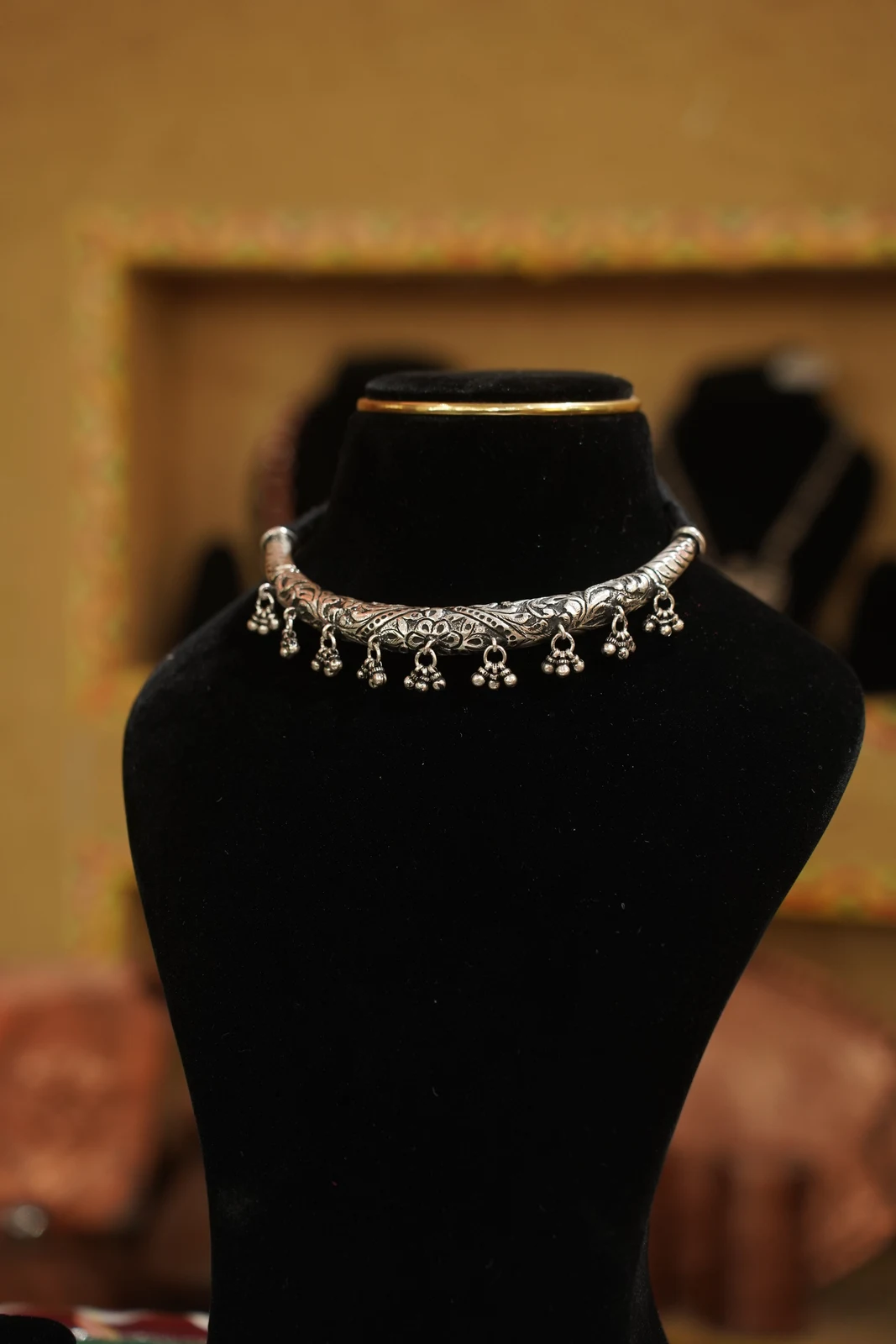
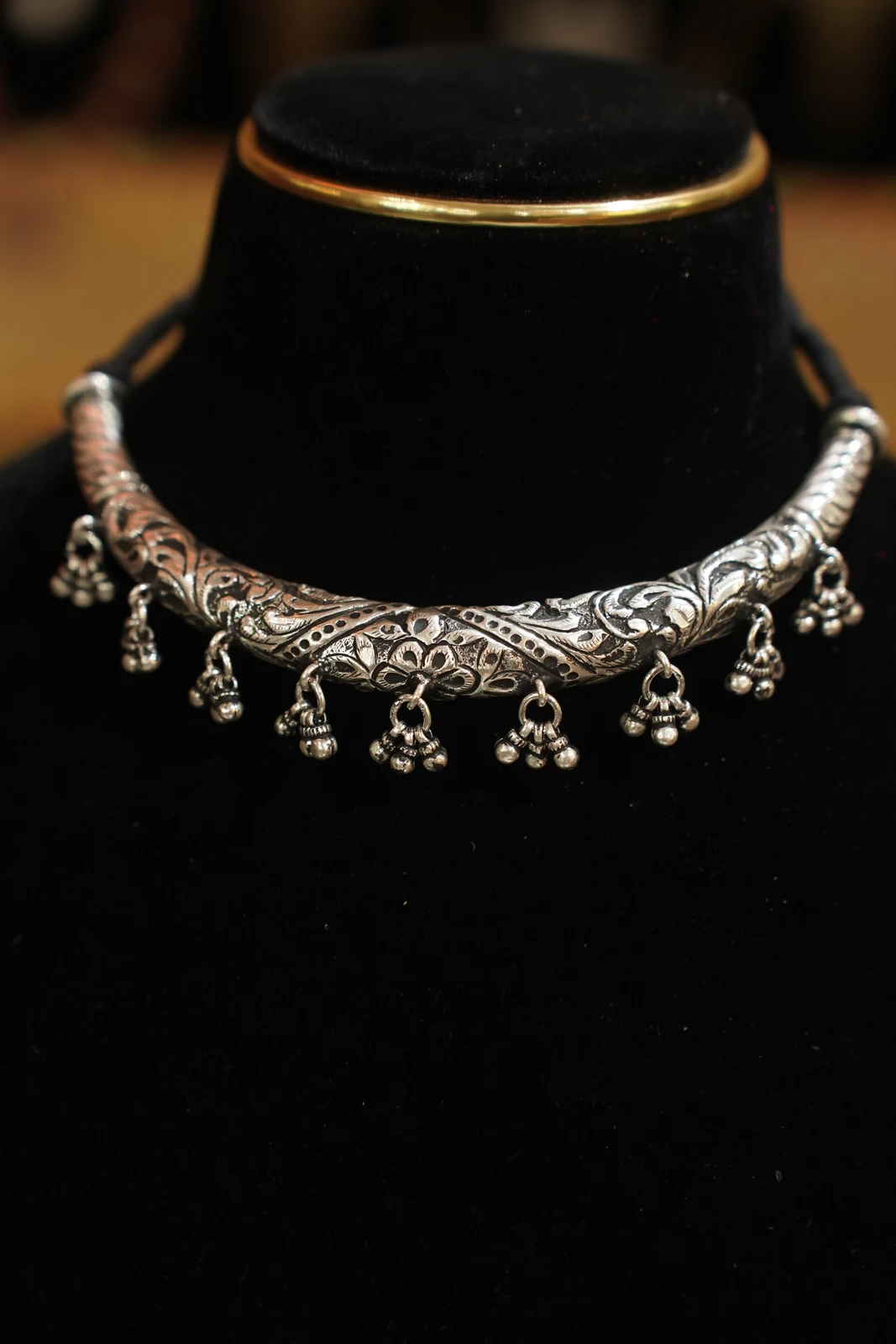
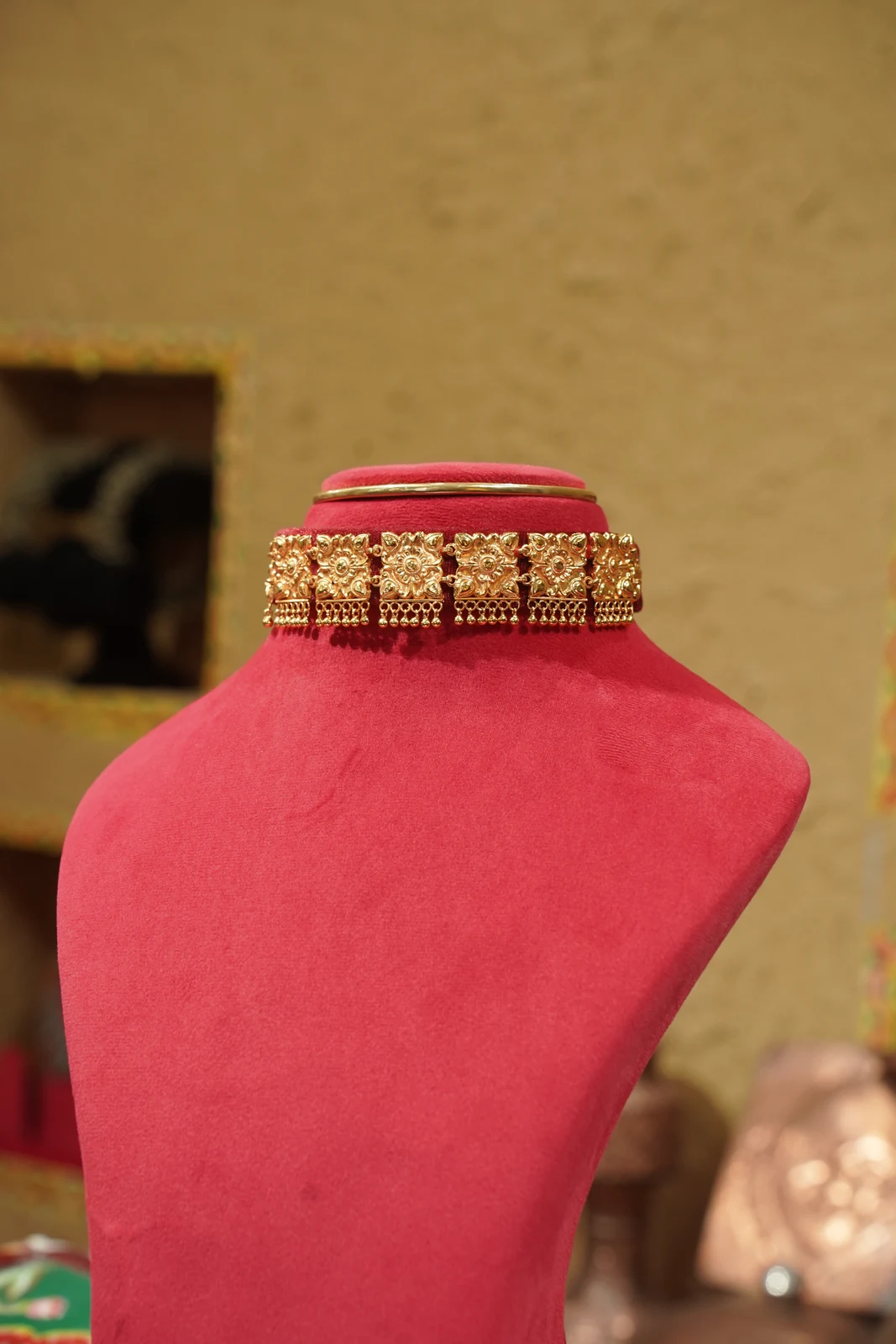
You notice the front first: the curve of a necklace, the line of small hanging elements, the way a raised pattern catches light. Then you turn it over. The back, the joining points and the fastening tell another part of the story. These are the places where a beautiful design has to become something a person can actually wear.
A karigar is a skilled maker. Understanding jewellery craftsmanship begins with looking beyond the finished photograph and asking how shape, assembly, decoration and fit were achieved. Different pieces can use different processes. A contemporary Pahadi-inspired necklace is not necessarily made in the same way as an inherited ornament, even when their silhouettes resemble each other.
This guide offers a vocabulary for looking and asking. It explains general metalworking processes and practical questions for a jeweller; it does not claim to document a visit to a Hansuli workshop. The precise making story of an individual piece belongs to the people who made it. Their account deserves to be heard before it is turned into a caption.
Before the tools: what is the maker being asked to make?
A clear design brief starts with the wearer. Where should the ornament sit? Will it be worn for a short ceremony or an afternoon of movement? Does it need to work with a particular neckline? A broad collar and a long pendant ask different things of both design and fit. A sketch can suggest the answer, but trying an appropriate sample often reveals questions that a drawing misses.
Next comes the material specification. Ask for the base metal, any surface coating, and the materials used in other components. A gold-coloured surface alone cannot tell you what is underneath. A stone-like detail might need its own description. The language should be precise enough that the person buying the ornament understands what they are paying for and how they should care for it.
Measurements deserve similar attention. Length is useful for a flexible necklace, but a rigid collar may also require its inner width, opening and intended fit. Weight is another consideration, although comfort cannot be reduced to one number. The position of that weight matters. Write down the agreed specifications rather than expecting a photograph to communicate them later.
The brief should also record choices: a softer outline rather than a sharp edge, a quieter finish rather than a highly reflective one, a fastening that the wearer can manage. Those choices are part of craftsmanship. They connect the maker's decisions to the person who will live with the piece.
Forming and casting: two words worth separating
The V&A's guide to metalworking describes casting as shaping metal through a mould and raising as working sheet metal into a three-dimensional form. Neither term, by itself, describes every stage of a finished ornament. A design might combine prepared components with further assembly and finishing. Ask which processes apply to the actual piece under consideration.
For a buyer, the useful distinction is between a process name and a promise. “Cast” does not automatically mean careless work. “Hand-shaped” does not automatically guarantee good fit. A maker can explain why a particular method suits the dimensions, pattern or production needs of a design. That explanation is more informative than a contest over which label sounds most romantic.
Look at the object from several angles. Is its outline continuous? Are repeated parts arranged deliberately? Does the transition between a broad section and a narrow one look considered? These observations can help you discuss the design, but they are not a reliable way to reverse-engineer its manufacture. Photographs usually cannot show all the evidence needed to identify a process.
If a seller describes a necklace as entirely handmade, ask what that description includes. It might refer to shaping, assembling, setting, surface work or several of these stages. Request a specific answer without assuming that tools, templates or purchased components erase the maker's contribution. The more clearly the stages are described, the easier it is to appreciate the work that was actually done.
Joining is part of the design
A necklace assembled from several elements has relationships between those elements. Some parts need to move; others need to remain in position. The front view may conceal the places where those requirements are met. When examining a sample, ask the jeweller to show how its separate parts connect and which parts should move during ordinary wear.
Soldering is one way of joining metals, using molten solder between the surfaces. Other assemblies may use links or fastenings. The relevant question is what has been used here and how it should behave. Do not pull at a connection to test it yourself. Ask for a demonstration that respects the ornament and follows the maker's handling advice.
A closure deserves a full demonstration before a purchase or a loan. Try opening and closing it in the way you would when dressing, with assistance if needed. Can you see which direction it works? Is there a part that must line up first? Is the instruction easy to remember? A fastening that looks unobtrusive in a photograph may feel quite different in your hands.
Keep any instructions with the purchase record. If another family member borrows the piece, they should not have to guess how it closes. Small pieces of practical knowledge often disappear during a handover, even when the ornament itself is carefully kept. Recording them protects both the jewellery and the next wearer's confidence.
Decoration has its own vocabulary
The V&A distinguishes chasing, which works a surface without removing metal, from engraving, which cuts into it. It also describes embossing or repoussé as working metal into relief. These terms name techniques, not a regional identity. Their presence alone cannot establish that an ornament comes from a particular village, family or period.
For a first look, describe what you can see before naming how it was made. You might notice a border of small repeated marks, a raised central element, pierced spaces or lines surrounding a petal-like shape. This keeps an observation separate from an attribution. A clear photograph and the maker's explanation can then help you learn the right technical words.
A repeated pattern can be satisfying because its spacing gives the eye a route to follow. A small change in scale can draw attention towards the centre. These are useful questions to put to a designer: why is this detail larger, why does the border stop here, and what was meant to catch the light? The answers reveal intention without requiring an invented symbolic meaning.
Avoid treating every irregularity as proof of handwork or every regular pattern as proof of a machine. Both conclusions can be misleading when the production history is unknown. The same restraint applies to age. A newly made design can use an older-looking finish; an inherited object can have been repaired. Ask for evidence rather than letting appearance do the entire job.
Finishing is where the wearer enters the conversation
Consider the areas that touch skin or clothing. An ornamental edge may look beautiful but still need to sit comfortably. With permission, handle the sample as the jeweller recommends and examine the reverse as carefully as the front. Ask whether the piece is intended to lie directly against skin or work with a particular kind of garment.
Try ordinary movements during a fitting. Sit down, turn your head and lift your arms gently. Notice whether a rigid ornament changes position, whether a hanging element interferes with a neckline, and whether an earring feels manageable. A fitting is not a durability test. Its purpose is to discover whether the design suits the intended wearer and occasion.
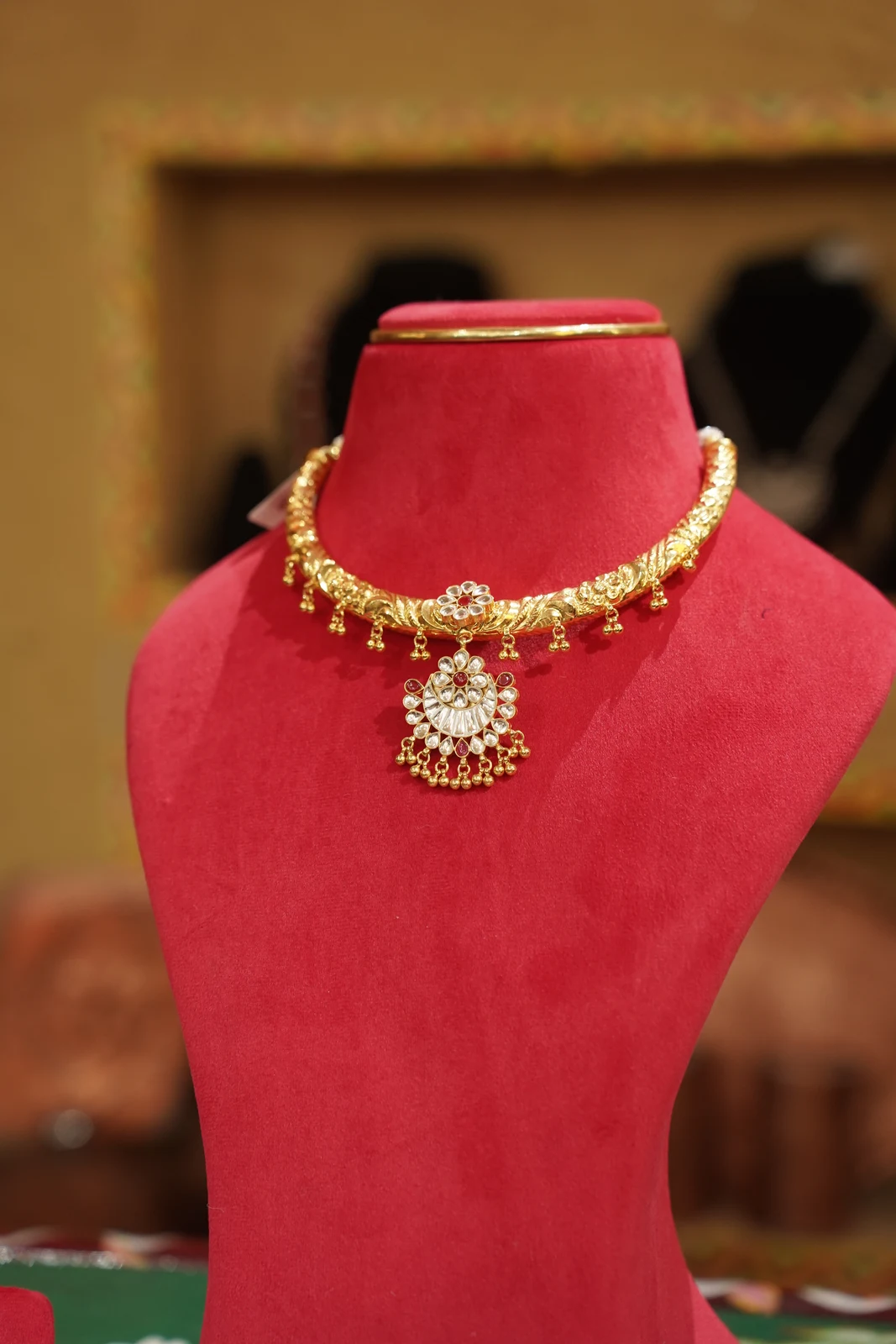
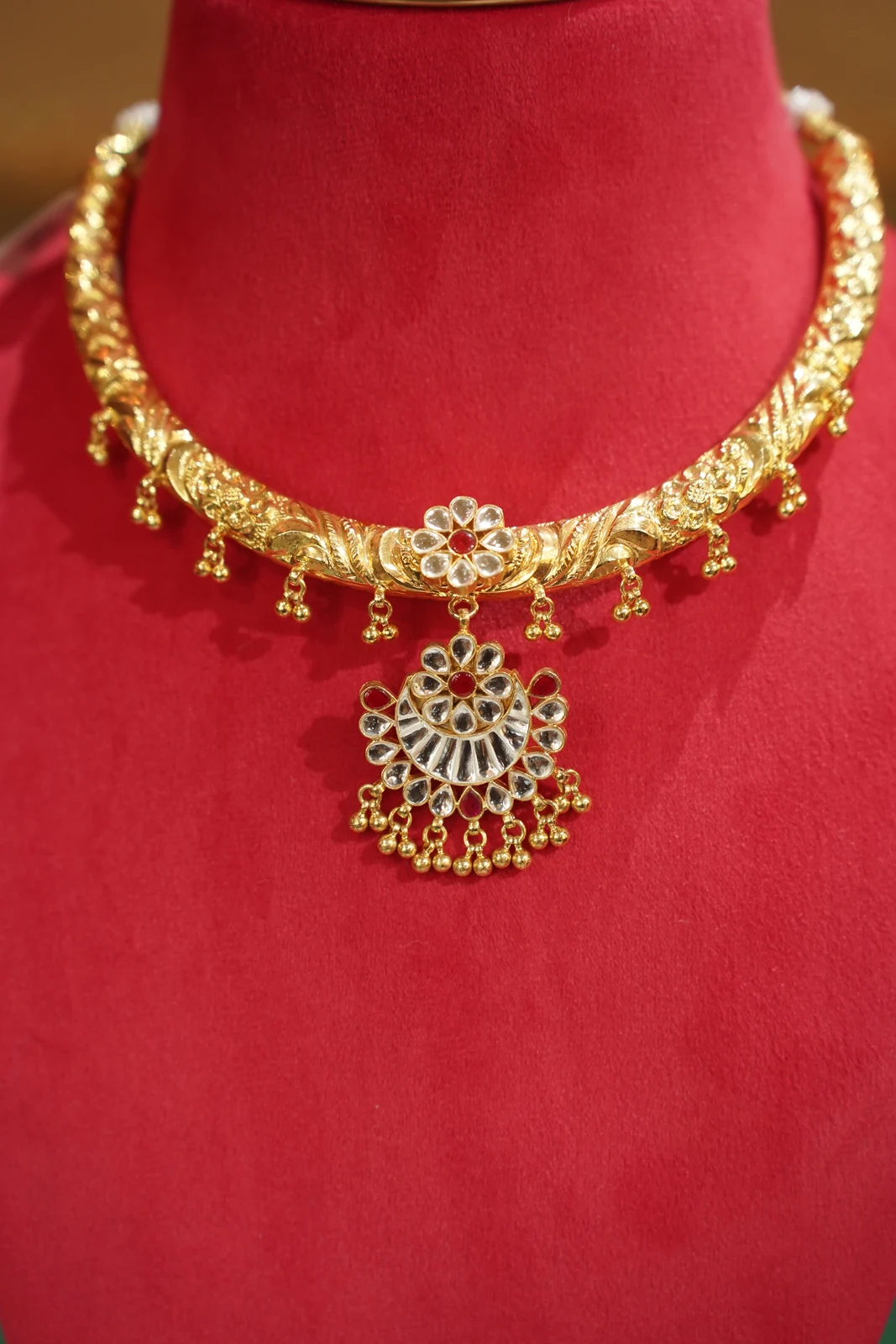
Surface finish also affects how the design reads. A bright surface can make an outline stand out; a quieter surface can make raised details easier to notice. In a product photograph, lighting influences both. Ask to see the ornament in normal light as well as any display lighting, so that your expectation is based on the piece rather than only its presentation.
If you need a change, describe the problem plainly: this section presses here, this fastening is difficult to reach, this length clashes with the neckline. Then ask whether adjustment is suitable for the construction. A jeweller may need to assess that question before answering. An immediate promise is less useful than a clear explanation of what can safely be changed.
Questions that make a purchase record useful
Ask for written material details, dimensions, weight where available, the description of the finish and care instructions for the whole ornament. If a mark or certification is mentioned, ask what it verifies and which part of the piece it covers. Do not assume that a collection name or a colour description supplies the same information.
Ask about aftercare before it becomes urgent. Who should be contacted if a fastening stops working? What assessment happens before repair? Would replacing a component change the appearance? Are any services subject to inspection or additional charges? A clear answer helps you understand the relationship you are entering, as well as the object you are buying.
Keep the invoice alongside photographs of the front, back and closure. Photograph supplied labels too. Give the file a name that a family member could understand without reading an old chat conversation. If the piece is a gift, pass along this information with it. The recipient should receive the practical record, not just the box.
For an inherited ornament, record uncertainty honestly. “Material not yet confirmed” is useful information. A relative's recollection of the maker should be preserved as a recollection, including who shared it. New paperwork should not silently turn a family memory into a technical certification. Each kind of evidence has a place, and keeping the distinction makes the record stronger.
Repair is a conversation before it is a treatment
Before arranging work on an older piece, describe what matters about it. Perhaps the outline is familiar from family photographs, or the fastening was changed by an earlier wearer. Your priorities might be secure wear, preserving the existing appearance, or simply understanding its condition. Those goals are different and should be discussed separately.
Ask the professional to explain the proposed intervention and any alternatives. Request clarity about what would be removed, replaced or changed. If an old component is replaced, ask whether it can be returned where appropriate. Take photographs before work begins and retain the repair note afterwards. A repair then becomes a documented chapter rather than an unexplained change.
Do not experiment with polishing recipes or bend a rigid ornament to improve its fit while the construction is uncertain. Get care advice that takes the whole piece into account, including coatings, settings and attached materials. The aim is not to make every object look new. It is to choose an appropriate way of caring for the particular object in front of you.
A real maker story needs more than a close-up
A useful craft interview starts with permission and a specific piece. Ask the maker which stages they completed, which decisions were difficult, and what a customer usually overlooks. Let them show a tool or unfinished component only when they wish to do so. Some processes, designs and workplace details may not be appropriate to film or share.
Agree how the maker wants to be named and credited. Ask which language they prefer for the conversation and whether the final captions can be checked with them. If several people contributed, record their roles accurately rather than turning the work into a story about one pair of hands. A team can have a compelling making story too.
For documentary photographs, keep context. A close-up of a tool should be accompanied by a confirmed description of what is happening. A finished product photograph illustrates its appearance; it cannot establish the method, duration or location of manufacture. Avoid arranging unrelated tools around jewellery and presenting the result as evidence of its making.
Claims about training, working conditions or support for makers require their own records and consent. Beautiful footage does not verify them. Until those details are available, a craft article can still teach readers how to look, explain useful terms and prepare better questions. Honest curiosity gives the eventual interview somewhere substantial to begin.
Can you recognise skilled work from a photograph alone?
You can notice an outline, an arrangement and visible surface details. You cannot confirm comfort, hidden joins, material composition or the full making process from an attractive front view. Request additional views and written information, and arrange a fitting where possible. A photograph is most useful when it leads to a specific question rather than an immediate verdict.
Does a longer making time necessarily mean a better ornament? Time can be relevant to a verified account of the work, but it is not a complete quality measure. Ask what decisions and stages the account describes. Avoid guessing hours from the amount of decoration. A clear, restrained design can involve choices that are difficult to see in the finished image.
When does an ornament become an heirloom?
No production label can decide this in advance. A well-chosen piece may become associated with a person, a celebration or a habit of dressing. Another may be admired but rarely worn. An heirloom grows from that relationship, and its practical record helps the relationship survive beyond the person who first bought it.
When choosing from the Hansuli collection, use the photographs as a starting point and confirm the details of the specific design. Bring fit, material and aftercare questions to the Hansuli contact page. A thoughtful enquiry need not sound technical. It simply needs to explain what you want to understand before making a decision.
The next time you turn an ornament over, look for the questions it raises as well as the details you admire. Someone had to decide how the design would come together. Learning about those decisions is one way to value a karigar's contribution. Keeping their verified account with the object allows the next wearer to appreciate more than its front view.