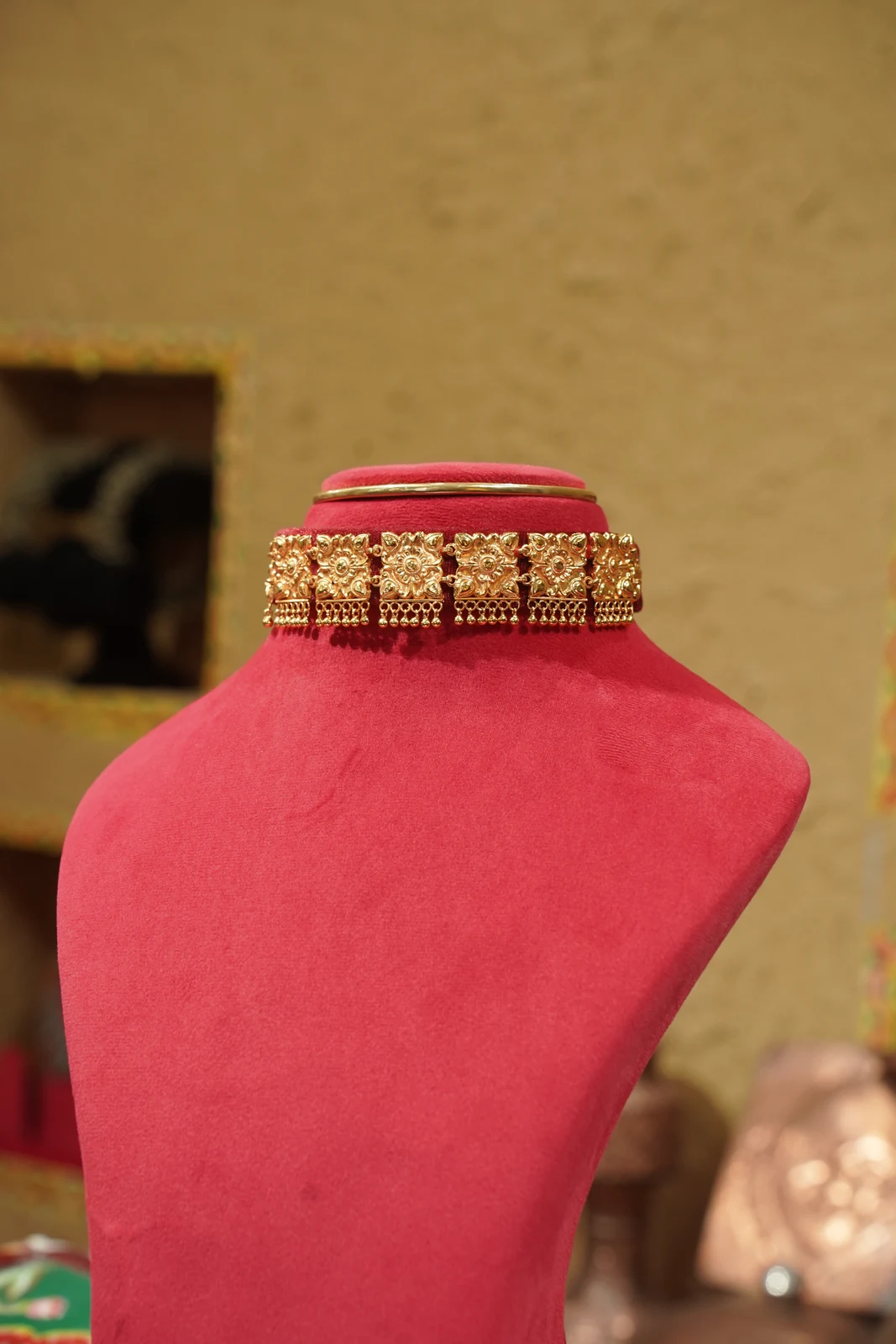
Pahadi wedding jewellery can express family memory, regional identity and a bride's own choices. Meanings vary by household and community. Learn what particular ornaments mean to your family, rehearse their fit with the outfit, and borrow or buy with clear consent and material information.
A wedding necklace can carry several stories at once: the person who wore it earlier, the relative who kept it safely, and the bride who is deciding how it belongs in her own celebration. Traditional Pahadi bridal jewellery can make those connections visible. Its meaning, however, comes from particular families and communities, not from one compulsory list that every bride must follow.
For someone planning a wedding connected to Uttarakhand, that is a useful place to begin. Ask which ornaments matter to your family, learn their names, and choose what you can wear comfortably. A nath, guloband, paunchi or hansuli may be an important part of the conversation. None should become a test of belonging, spending power or obedience. The wedding belongs to the people living it, including the woman whose body will carry the jewellery through a long day.
Begin with the family's meaning
Before comparing sets, arrange a small conversation with the people whose memories you want to include. An older photograph is often a better starting point than an online shopping list. Who is wearing the necklace? Was it hers, borrowed from a sister, or brought out only for that occasion? Which name did she use? Let those questions uncover the actual connection instead of supplying a grand interpretation first.
Keep the answers specific. “Our family wore this at my aunt's wedding” is useful information. It does not need to become “every Pahadi bride has always worn this.” Kumaoni and Garhwali identities encompass many family experiences, while other communities in Uttarakhand have their own knowledge and practices. Even two households from the same place may remember an ornament differently. A mixed-family wedding can hold more than one tradition without forcing them into a single account.
Ask about choice as well as ceremony. Was the piece comfortable? Did someone remove it for the meal? Was another ornament preferred for dancing? Such ordinary details help a bride prepare far more effectively than a claim that an accessory represents everything about womanhood. Family members may also disagree about a memory. Record that disagreement gently; there is no need to settle it through guesswork.
A useful planning note has three columns: the ornament, the family's reason for including it, and the bride's preference. A piece might be reserved for one photograph, another worn during a particular ceremony, and a third left safely at home. This turns heritage into a conversation with room for consent. If an expectation feels uncomfortable, discuss an alternative early, when everyone has time to listen rather than negotiate beside the dressing chair.
Look at what each ornament does
Names matter, but fit and construction matter too. Begin by identifying where the ornament sits and how it is secured. A necklace at the collar, a wrist ornament and a nose ornament create different practical demands. A photograph can show their appearance; it cannot tell you their weight, hidden fastening, material composition or condition. Those need inspection of the actual piece.
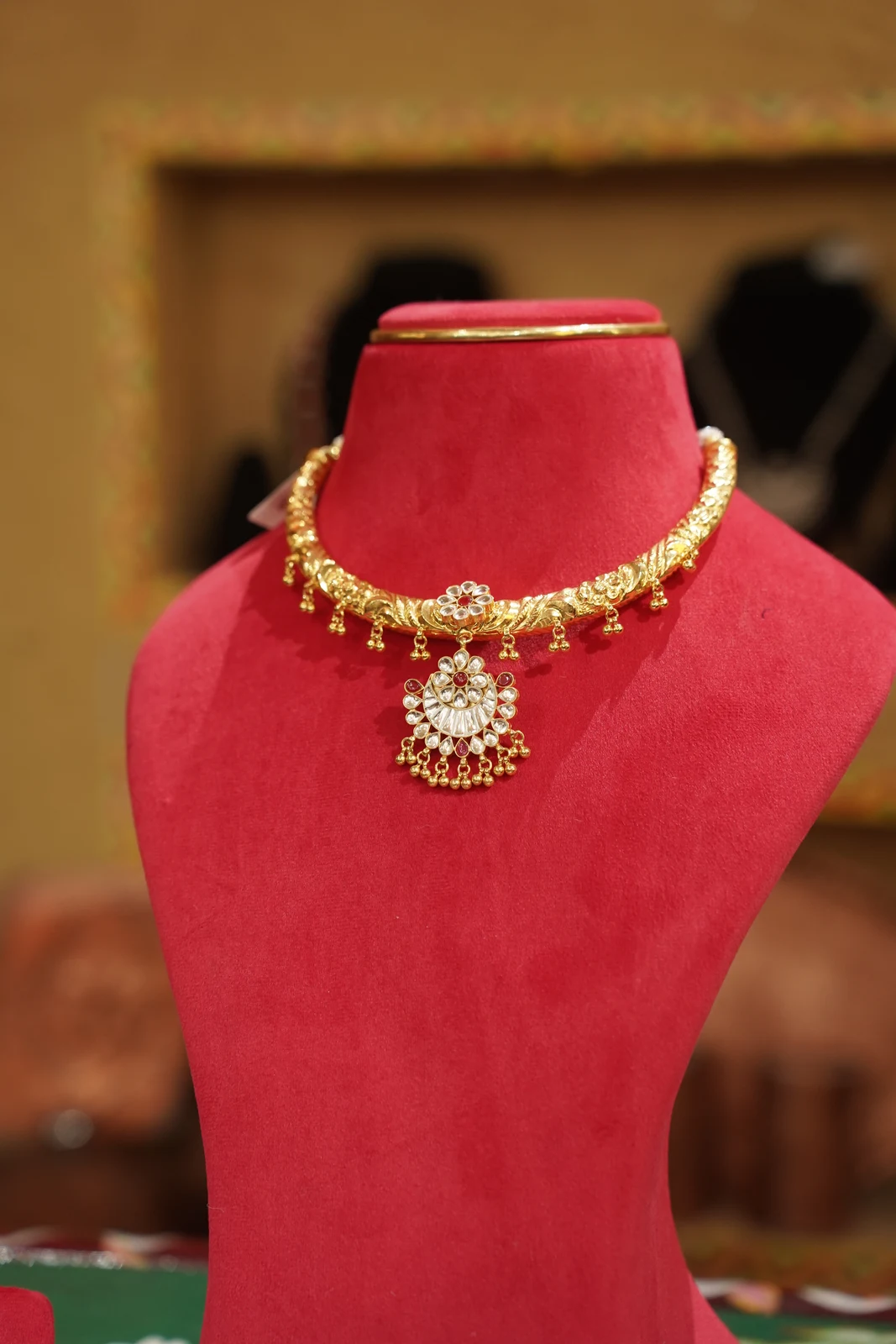
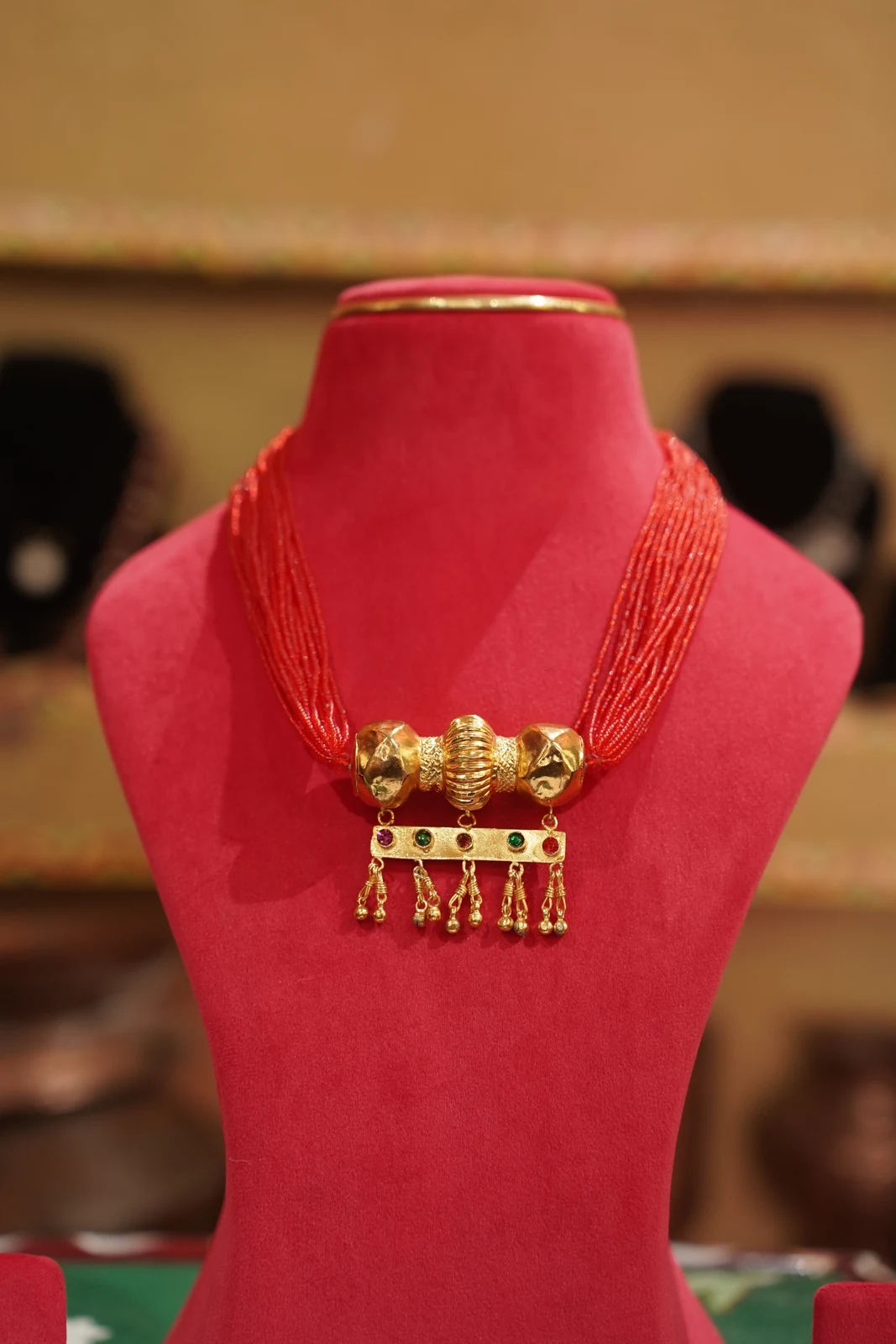
The Indian Family Jewels exhibition on Google Arts & Culture describes the hasli, also called hansuli, as a rigid collar necklace. That identifies a broad form found beyond Uttarakhand as well. For bridal planning, its firmness is the important difference from a freely moving chain. Check where its edges meet the body, whether it sits comfortably when you turn your head, and how the opening or clasp works. Do not force a rigid piece wider to make it fit.
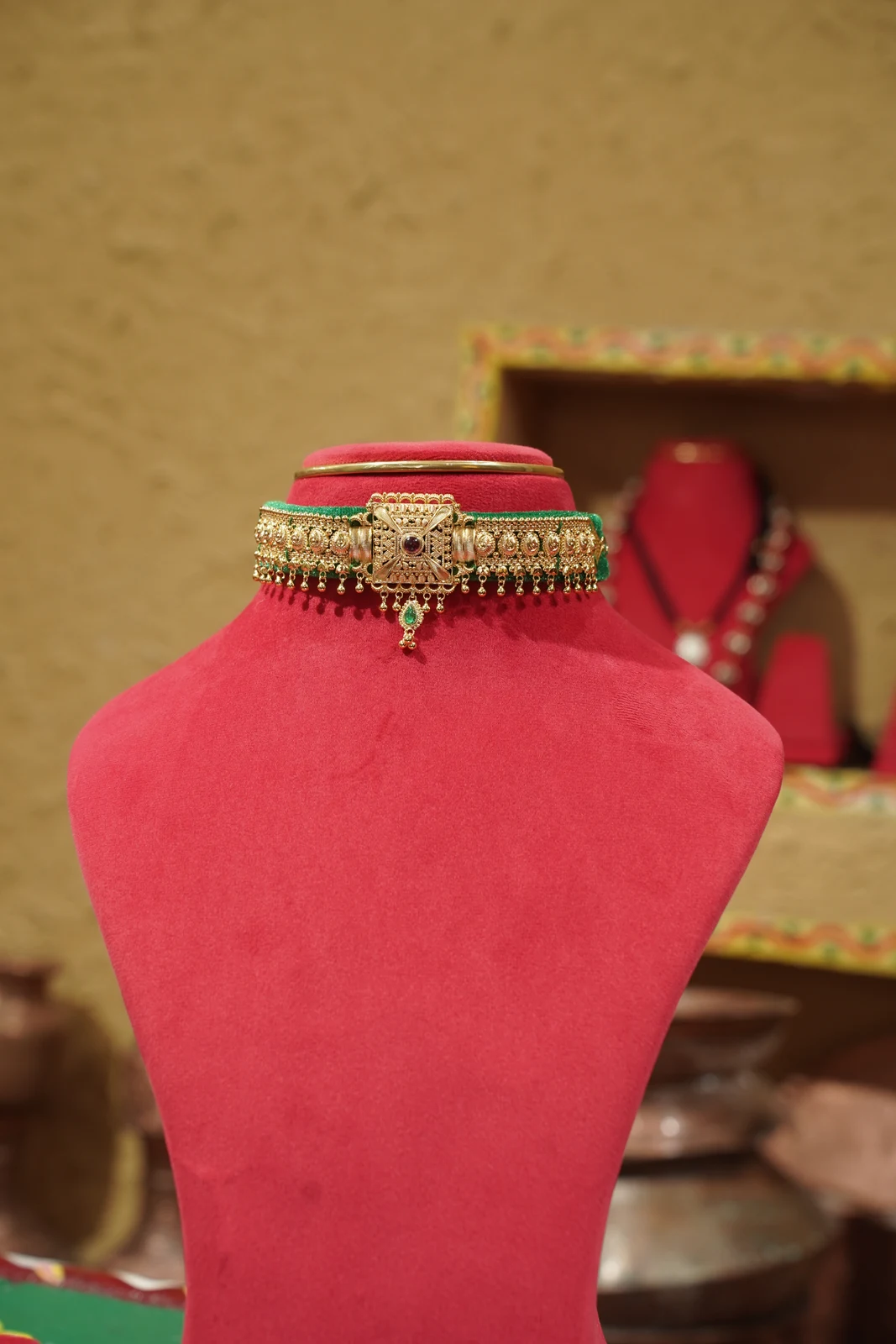
For a guloband or other close-fitting necklace, examine the back as carefully as the front. If the example has a textile backing or ties, check their condition and how they feel against the neck. A worn tie may need professional attention before the event. A handsome front view is insufficient if an old fastening cannot hold securely. Ask the owner to demonstrate the correct way of putting it on.
A paunchi, paunji or similarly named wrist ornament should be tried while doing things the bride will actually do: adjusting a sleeve, holding a small object and sitting with her hands relaxed. Names and spellings can vary, so describe the particular piece rather than assuming that every item with the same label has identical construction. Check whether rows, ties, edges or closures catch on embroidery.
With a nath or another nose ornament, treat the fitting method as a separate decision. A pierced style and a clip-on version are not interchangeable in use. Discuss the correct fitting with a competent professional, and do not make a last-minute change to a piercing simply to match a photograph. If a design uses a support chain, establish its attachment and movement during the rehearsal. Pain is a reason to stop and reassess, not a requirement of a convincing bridal look.
The emotional meaning of these pieces may be very different within your household. One can stand for a remembered relative; another may be a new gift chosen together. Write down the family's explanation in its own terms. Avoid assigning prosperity, protection or marital status to every ornament unless the people concerned identify that meaning and are happy for it to be shared.
Give the textile its own attention
Jewellery is worn with clothing, not in isolation. If a Kumaoni pichhoda is part of your family's wedding plan, discuss its placement alongside the jewellery during a full dressing rehearsal. The Indian Geographical Indications Registry lists Rangwali Pichhoda of Kumaon as a registered indication. That record identifies the textile; it does not certify a necklace, prove an ornament's metal purity or establish every family's wedding practice.
This distinction is helpful when researching a look online. A picture combining several objects does not make them one inseparable historical set. Ask the person arranging the garment how its folds, borders or pins should sit, then see whether they interfere with earrings, a support chain or a necklace fastening. Pin placement should never depend on pulling an ornament into an uncomfortable position.
For families including more than one regional textile or dress tradition, plan separate moments rather than crowding everything into one outfit. A quieter change of clothing can let each item be seen clearly. Photograph the full arrangement and a close detail, and record who helped explain it. The caption can name the family's choice without claiming that the image represents every wedding in Kumaon or Garhwal.
Rehearse for the day you will actually have
A fitting appointment should include the blouse or dress neckline, the planned hairstyle and the garment drape. Try the whole arrangement in ordinary light before deciding how it photographs. A high collar may press a rigid necklace upwards. A deep neckline may expose a fastening or leave the necklace sitting somewhere unexpected. These are proportion and fit questions, not failures of taste.
Wear the combination long enough to sit, walk, speak, bend slightly and raise your arms. Notice pressure points rather than waiting for obvious pain. A piece that feels manageable while standing still can become irritating during travel or several hours of ceremony. Ask how heavy it is, but do not treat weight alone as a comfort score. Shape, balance, attachment and the wearer's preferences also matter.
Check the practical conflicts. Hair can catch on an earring edge. A nose ornament can interfere with a face covering used during travel. Embroidered sleeves can snag a wrist fastening. A necklace may rub against a garment ornament at the same level. Take a short video while moving naturally; it can reveal a collision that a posed photograph hides. Stop the test if anything feels insecure.
Choose one trusted helper who knows the fastenings and has the bride's permission to assist. Before the day, let that person practise with the owner present. Avoid several people pulling at an unfamiliar heirloom at once. Keep a designated container for any piece removed, and decide who will take charge of it. An ornament placed temporarily on a chair or dressing-table edge is easy to overlook.
If you already know certain metals or fittings irritate your skin, discuss the specific item before wearing it. Colour cannot establish material composition, and an old family description may be incomplete. Ask for available records and appropriate professional advice. Similarly, secure fitting cannot be promised from an online photograph. A comfortable alternative or a shorter period of wear may be the most considerate choice.
Borrow an heirloom with a clear agreement
Borrowing can make a wedding feel connected to earlier generations without requiring a new purchase. It also creates responsibilities that should be agreed in advance. Ask who owns the piece, who can authorise its loan and whether there are restrictions on alteration. Family affection is not a substitute for consent, particularly when several relatives have an interest in an inherited object.
Look at the condition together in good light. Photograph the front, back and fastening with permission, noting anything already loose, worn or uneven. This is a shared record, not an accusation. A jeweller or conservator may need to assess a fragile item before it is worn. Do not arrange polishing, replating, resizing or replacement of a backing as a surprise favour to the owner.
Set a collection and return date, identify the person responsible for transport, and agree how the piece will be stored between events. If several outfits or venues are involved, give the ornament its own place in the schedule. Avoid passing it informally between relatives because everybody assumes somebody else is looking after it. A simple written message can prevent an upsetting misunderstanding later.
After the wedding, return the piece in the agreed condition and container. Tell the owner about any snag, dropped part or other incident rather than attempting a hidden repair. If appropriate, include a photograph of the bride wearing it and a note about its role in the day. That small addition can become part of the object's continuing family record, with the wearer's permission.
Build a look around one clear decision
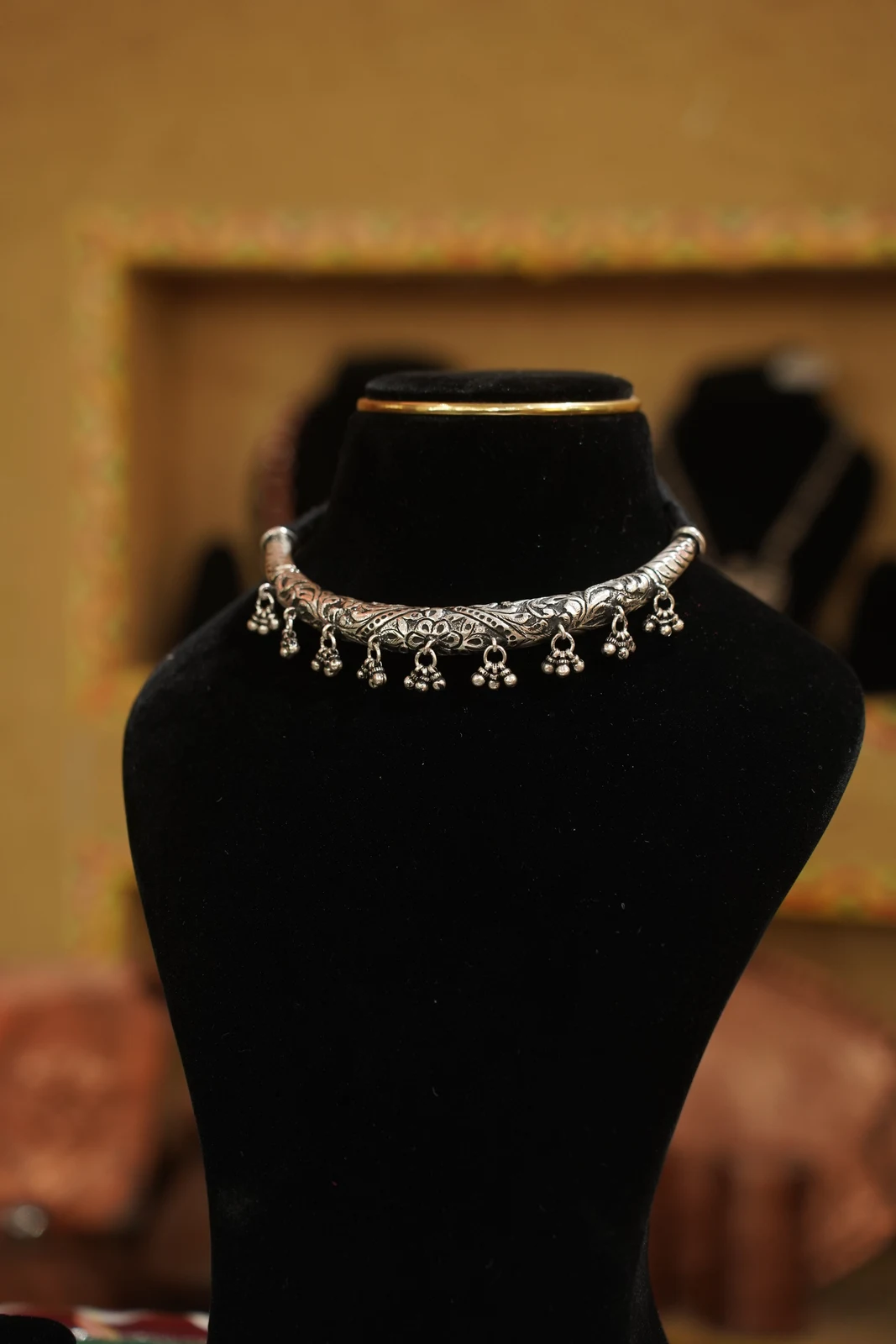
You do not need every ornament to be equally prominent. Choose the piece you most want people to notice, then try the others around it. A broad collar necklace may work better with simpler earrings for one bride, while another enjoys a fuller arrangement. Neither choice has greater cultural worth. The goal is a combination that feels deliberate and comfortable to its wearer.
With heavily embroidered clothing, check whether the jewellery's outline remains visible. A plain patch of fabric can give a detailed ornament space; repeated detail at every level may hide both the textile and the metalwork. Try the look seated as well as standing, because the drape changes. If you layer necklaces, check that the upper piece does not knock against or trap the lower one.
For a contemporary dress, a shirt-style reception outfit or a simpler second look, consider keeping just one familiar ornament. The family connection can remain clear without recreating an earlier photograph exactly. Explain what you have retained if you wish: the curve of a necklace, an inherited pair of earrings or a wrist piece chosen for the ceremony. Clothes changing does not erase the remembered person attached to an object.
Plan photographs that respect the bride's comfort. A jewellery detail need not require an awkward pose or expose more of a neckline than she wants. Ask before sharing close-ups and before naming the owner of an heirloom publicly. The private album can preserve a fuller account than a social caption. A lovely image is strongest when the person in it also feels fairly represented.
A calm planning timeline
Several weeks before the wedding, gather the available pieces and decide which need assessment. Confirm any new order's dimensions, material description, fitting method and delivery expectations in writing. Allow time for a genuine fit check rather than relying on the final parcel arriving just before departure. For a current Hansuli design, use the actual product information and ask the store to clarify unanswered questions about that item.
Closer to the event, run the full dressing rehearsal and record the order of putting things on. A fastening hidden beneath hair or a drape may need to be secured earlier. Note what can be removed for travel and what help will be needed afterwards. Share these practical details only with the people involved; a private family plan does not need to become public content.
The day before, prepare a labelled container and a short inventory. Check that all agreed pieces and fastening parts are present. Keep jewellery handling separate from rushed packing, makeup spills and crowded surfaces. Do not experiment with an unfamiliar cleaning method at this stage. If an item has become loose or uncomfortable, choose the prepared alternative instead of forcing it into the schedule.
After the celebration, arrange returns before everyday commitments take over. Save a few consented photographs with names, date and the family explanation. Record what the bride chose, including a change she made for comfort. That is part of the wedding's history too. A future wearer will benefit from knowing how the outfit worked, not only how it looked in the portrait.
Questions brides can ask without embarrassment
Does a Pahadi wedding require a complete traditional jewellery set? A family's wishes deserve discussion, but this guide cannot prescribe a universal set. Ask what particular pieces mean in your own celebration, and decide together what the bride wishes to wear. An expensive purchase or a heavy ornament does not prove a stronger connection to Uttarakhand.
Can you combine inherited jewellery with a modern outfit? You can plan that combination thoughtfully, checking fit, textile contact and the owner's permission. If a piece belongs to a particular family ceremony, discuss that context before adapting it. Learning the story is as important as choosing a neckline, and a respectful conversation can make room for both continuity and a new preference.
What if an heirloom cannot be worn safely? It can be photographed, displayed securely with permission or included in the family record without being placed on the bride. Preservation does not demand an avoidable accident. The most meaningful wedding arrangement is one in which family memory and the bride's wellbeing are cared for together, with enough attention that both remain welcome after the last photograph.
Explore the current Hansuli jewellery collection
Ask Hansuli about a specific design, fit or material description